Teaching Your Children at Home Is the Best Investment You Will Ever Make
Whether you homeschool full-time or teach alongside traditional education, one of the most powerful things you can do is bring God’s Word into your home with intentionality.
Keep ReadingWhy Revayah
More Than Academics
Rooted in Torah
The Shema reminds us to teach our children diligently—when we sit down, when we walk along the way, when we lie down, and when we rise up. Our resources help you create a family rhythm rooted in God’s Torah and the biblical feasts.
Designed with Beauty
Every resource is crafted with beauty, intentionality, and thoughtfulness so that every activity becomes a chance for your family to bond, learn, and grow closer together.
Works With Any Philosophy
Whether you follow Charlotte Mason, Montessori, Waldorf, unschool, eclectic, classical philosophies, or traditional education—our printables enrich your child’s education and bring depth to the time you already spend together.
Our Foundation
What Is Messianic Theology?
Long before there were church buildings, creeds, or denominations, there was a small but passionate community of Jewish men and women who believed that Yeshua—Jesus—was the promised Messiah of Israel.
They didn’t stop being Jewish when they came to that belief. They continued to worship in the synagogue, observe the Sabbath day, celebrate the biblical feasts, and live according to the Torah. Their faith in Yeshua wasn’t a departure from their Jewish identity—it was the fullest expression of it.
Over the centuries, as the faith spread into the Gentile world, much of that original Jewish context was lost. The councils and church fathers shaped a version of Christianity that increasingly distanced itself from its Hebrew roots. But the foundation was always there, woven into the Scriptures from the very beginning—from the promises to Abraham, through the Torah, the Prophets, and into the life and teaching of Yeshua Himself.
Today, the Messianic movement seeks to recover and live inside that original Jewish expression of faith in Yeshua. Messianic Jews and the Gentile believers grafted in alongside them worship together, celebrate the biblical feasts, study Torah, and honor the Jewish roots of a faith that has always been Jewish. It’s not about adding Jewish customs onto Christianity or replacing the Jewish people and their calling—it’s about joining the story God has been writing since Genesis and living it out as one family.
Browse Our Biblical Feasts ResourcesThat’s the soil Revayah grows from. Everything we create reflects this conviction—that the Scriptures are alive, that the feasts still speak, and that families who walk in this rhythm together are giving their children something that will anchor them for a lifetime.
The Heart of What We Do
Why Biblical Feasts?
In Leviticus 23, God gave the people of Israel something extraordinary—not a list of religious obligations, but a rhythm for life. Days of feasting and celebration. Days of reflection and fasting. Seasons of remembering what God had done and anticipating what He would do. Each appointed time was designed to turn the hearts of His people back to the One who gave them life and freedom from slavery.
These weren’t just for ancient Israel. Yeshua Himself celebrated every one of these feasts. He was crucified on Passover. He rose during the Feast of Firstfruits. The Holy Spirit was poured out on Shavuot—the Feast of Weeks. The fall feasts of Trumpets, Atonement, and Tabernacles point toward promises still being fulfilled. When you begin to see the biblical feasts through this lens, the entire story of Scripture comes alive in a way that transforms how your family experiences God’s Word.
We believe these feasts are still relevant—not as a burden to carry, but as a gift to unwrap year after year. We join with the Jewish family we’re grafted into and celebrate the biblical feasts as an annual rhythm that gives our family life, purpose, and a deep sense of belonging in God’s story. And we’ve found that children especially come alive when they can taste, touch, build, sing, and celebrate their way through the Scriptures rather than just reading about them.
That’s why the biblical feasts are at the heart of everything we create. They’re the perfect framework for family learning—rich with story, theology, history, and hands-on experience. Each feast becomes an opportunity to slow down, gather your family around God’s table, and pass something lasting to the next generation.
Curated for Your Home
Resources for Your Family
 PassoverSale
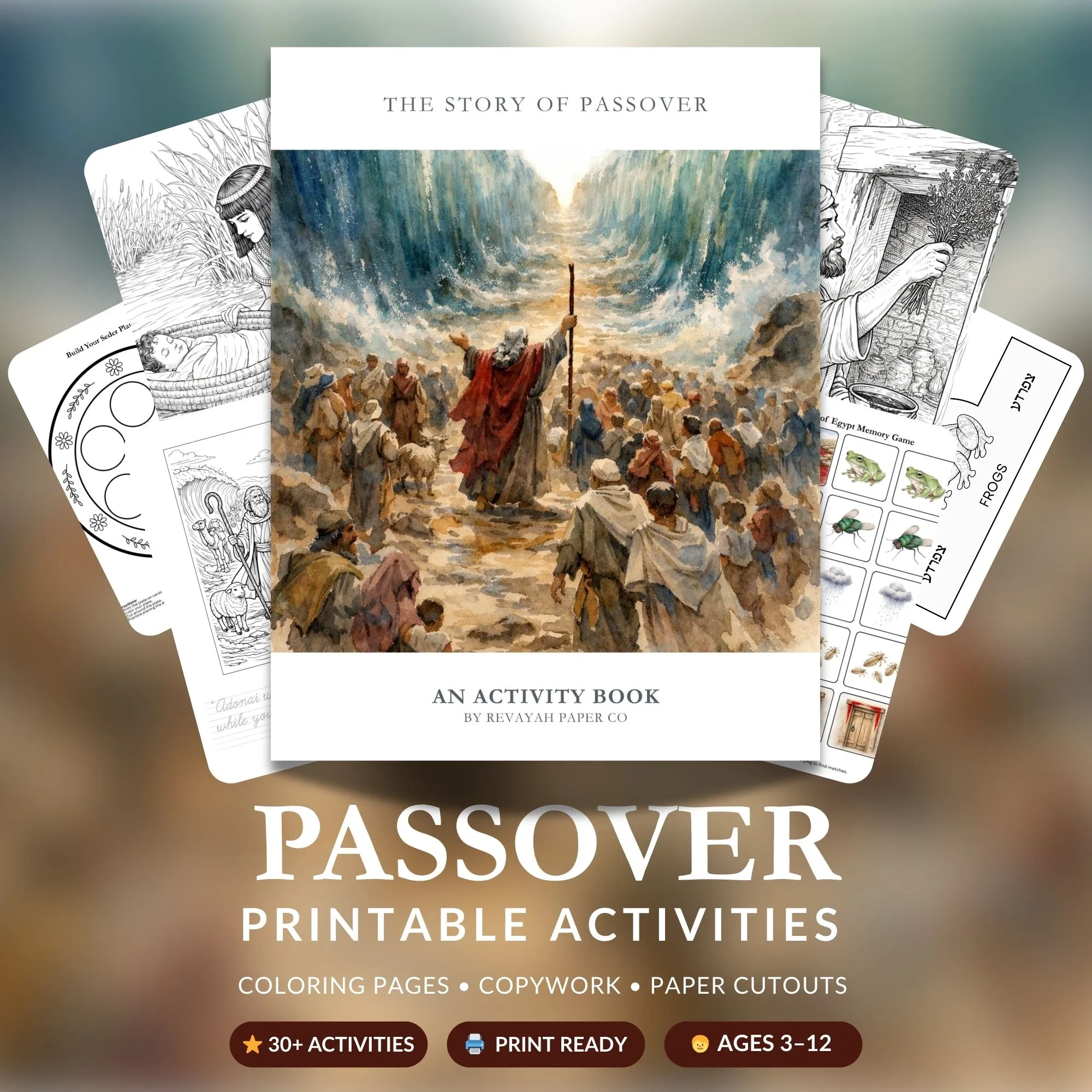
Passover Activity Bundle for Kids
Tell the story of Passover and God's deliverance of the Children of Israel with 30+ pages of hands-on activities — coloring pages, scripture copy-work from Exodus, mazes, word searches, a seder plate cutout craft, matching games, and plague headbands for all 10 plagues. Perfect for ages 4-12.
$12.99$9.74
View Details →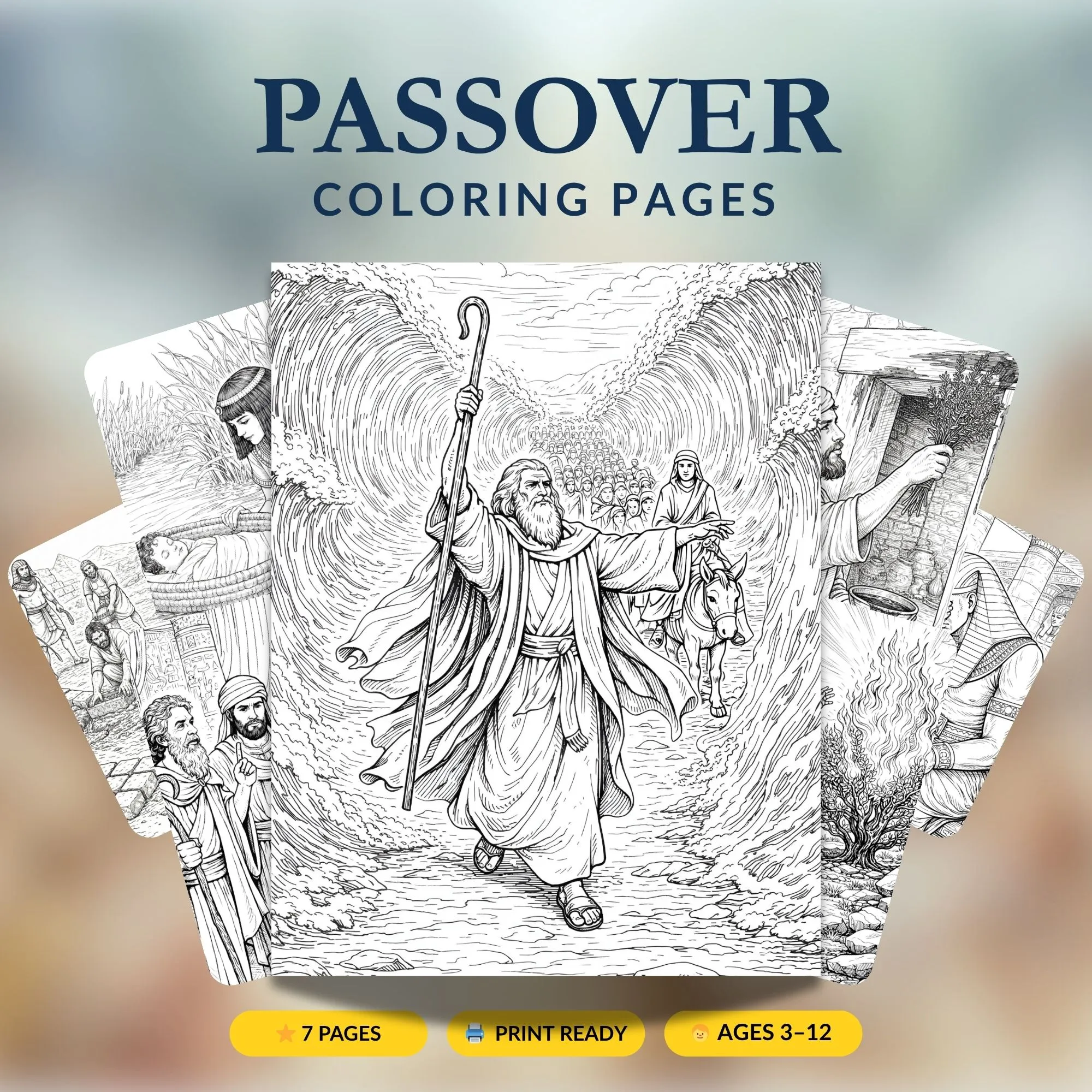 Passover
Passover Coloring Pages for Kids
7 beautifully illustrated printable coloring pages featuring key scenes from the book of Exodus — the plagues, the parting of the Red Sea, and other defining moments of the Passover narrative. Ages 4-12.
$2.99
View Details →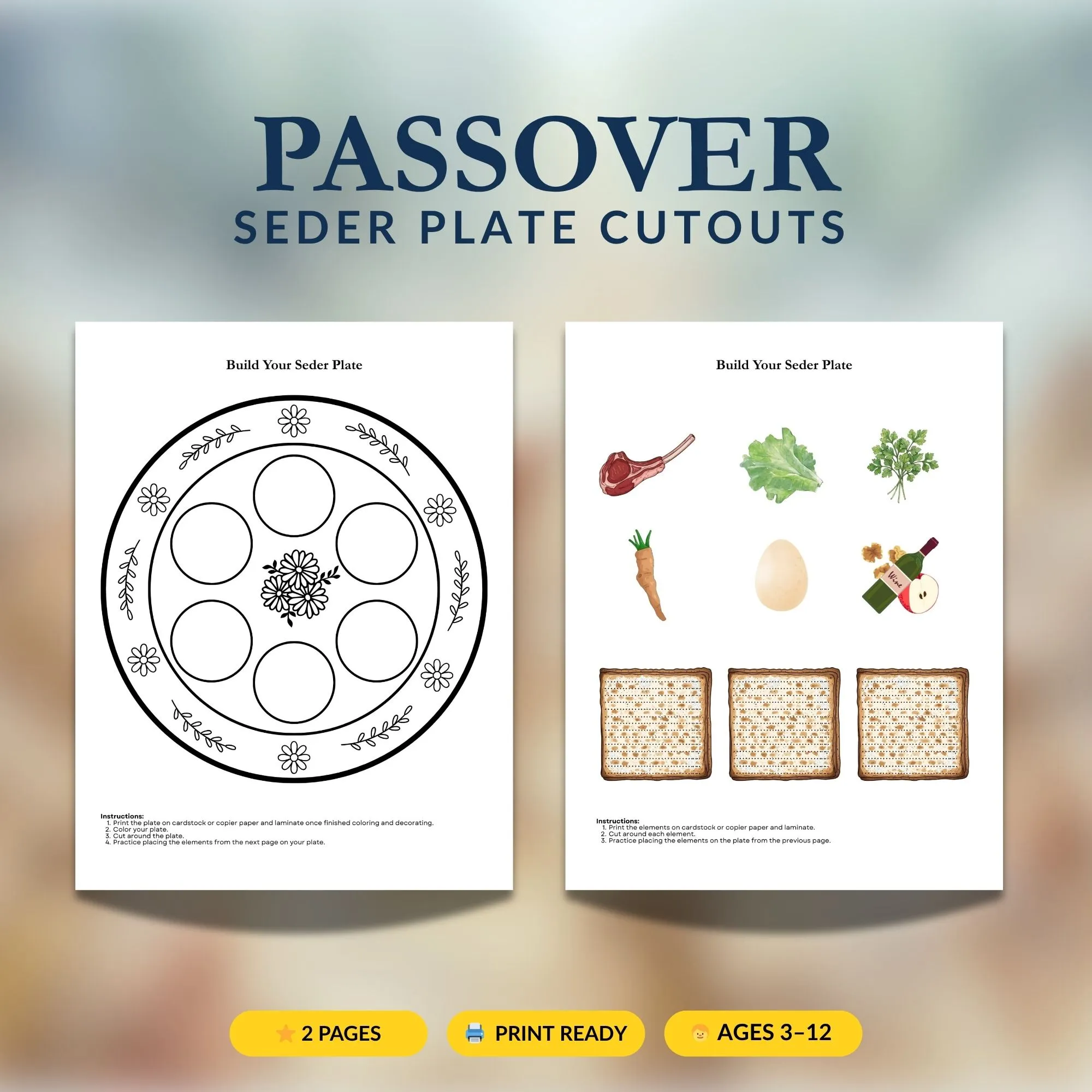 Passover
Seder Plate Paper Craft for Kids
A hands-on cut and paste craft where children color, cut out, and assemble their own seder plate — a tactile way to learn the elements of the Passover meal. 2 printable pages, ages 4-12.
$1.99
View Details →Our Approach to Education
Charlotte Mason Philosophy
Charlotte Mason was a British educator in the late 1800s who believed something radical for her time—that every child, regardless of background, deserved a rich and generous education. Not worksheets and rote memorization, but living ideas that feed the mind and the heart. She famously said that education is an atmosphere, a discipline, and a life—and her methods reflect all three.
At the center of her philosophy is the belief that children are whole persons, not empty containers to be filled. They come into the world with curiosity, dignity, and the capacity to engage with real ideas from a very young age. A Charlotte Mason education honors that by offering children what she called a “feast” of knowledge—living books written by passionate authors, time spent in nature observing God’s creation, beautiful art and music, poetry, handwriting through copywork, and the practice of narration, where children retell what they’ve learned in their own words.
Lessons are kept short—typically 15 to 20 minutes for younger children—because Mason understood that focused attention is more valuable than long hours of busywork. The goal isn’t to exhaust a child with information but to awaken a lifelong love of learning. Afternoons are left free for play, exploration, handwork, and the kind of unstructured time where children process and internalize what they’ve encountered.
For families of faith, Charlotte Mason’s philosophy is especially compelling because she built it on a foundation of Scripture. She believed that the knowledge of God is the most important knowledge a child can receive, and that all other learning flows from that relationship. Nature study becomes an encounter with the Creator. History becomes the story God is telling. Literature becomes a window into the human experience as God designed it.
This is why Charlotte Mason’s approach pairs so naturally with the biblical feasts. Her vision of education as a “feast”—spreading an abundant table of ideas for children to take in—mirrors the way God designed His appointed times. The feasts are already multisensory, story-rich, and family-centered. When you bring Charlotte Mason’s methods to the biblical calendar, you get something powerful: an unhurried, wonder-filled education rooted in the very rhythm God gave His people.
That’s exactly what Revayah resources are designed to support. Whether your family is new to Charlotte Mason or has been using her methods for years, our materials are crafted to fit naturally into a living education—full of beauty, rich in theology, and always pointing your children back to the God who set these times apart for them.
A Growing Collection
Learning Through the Biblical Calendar
The Biblical feasts and Jewish holidays are some of the richest teaching moments in Scripture—stories of faith, courage, and God’s faithfulness that have been passed down for thousands of years.
We’re building a collection of hands-on resources that bring these ancient stories to life in your home. Unit studies and activities include coloring pages, paper cut-outs, and other printables that help your children experience these holidays—not just read about them.
Browse Our ResourcesOur Resources Include
- Coloring pages with original watercolor illustrations
- Paper dolls, crowns, and hands-on cut-outs
- Scripture readings and discussion prompts
- Activity pages designed for ages 4–12
- Charlotte Mason-friendly copywork