Spring Nature Study for Passover: A Charlotte Mason Approach
 By Kristelle7 min read
Connect spring nature study to the Passover story with a Charlotte Mason approach — growing bitter herbs, observing barley, and journaling from garden to seder table.
Long before Charlotte Mason wrote about nature study, The God of Israel embedded it into the Passover story. Barley ripening in the fields. Hyssop dipped in blood and pressed to a doorpost. Bitter herbs gathered by hand. Lambs watched over for days before the sacrifice. Every element of the first Pesach (The Hebrew word for Passover—the celebration of God's deliverance of the Israelites from Egypt) was rooted in the created world — things that grew, things you could touch, things a child could observe.
This spring, as we prepare for Passover, our family is leaning into that connection. We're letting the natural world teach the Exodus story in a way no textbook ever could.
What Charlotte Mason Would Have Loved About Passover
Charlotte Mason believed that children learn best through direct contact with living things and living ideas. Her philosophy rests on nature study, living books, narration, and short focused lessons that leave room for wonder. She insisted that children are born persons — capable of real thought, real observation, and real connection with the world around them.
Passover fits this philosophy as if it were designed for it.
The seder (the Passover meal) is narration at its finest — the youngest child asks questions, and the family retells the story together. The elements on the seder plate are nature specimens with theological meaning. The week of preparation is a hands-on unit study that engages every sense. Even the timing is Charlotte Mason: the feasts follow the agricultural calendar, tying spiritual truth to the rhythm of the seasons.
If Charlotte Mason had known about the biblical feasts, I think she would have championed them.
A Spring Nature Study Calendar for Passover
In the three to four weeks before Passover, try weaving these nature study activities into your regular rhythm. No need to overhaul your schedule — just add one or two per week alongside your usual lessons.
Weeks 3–4 before Passover: Observing Spring's Arrival
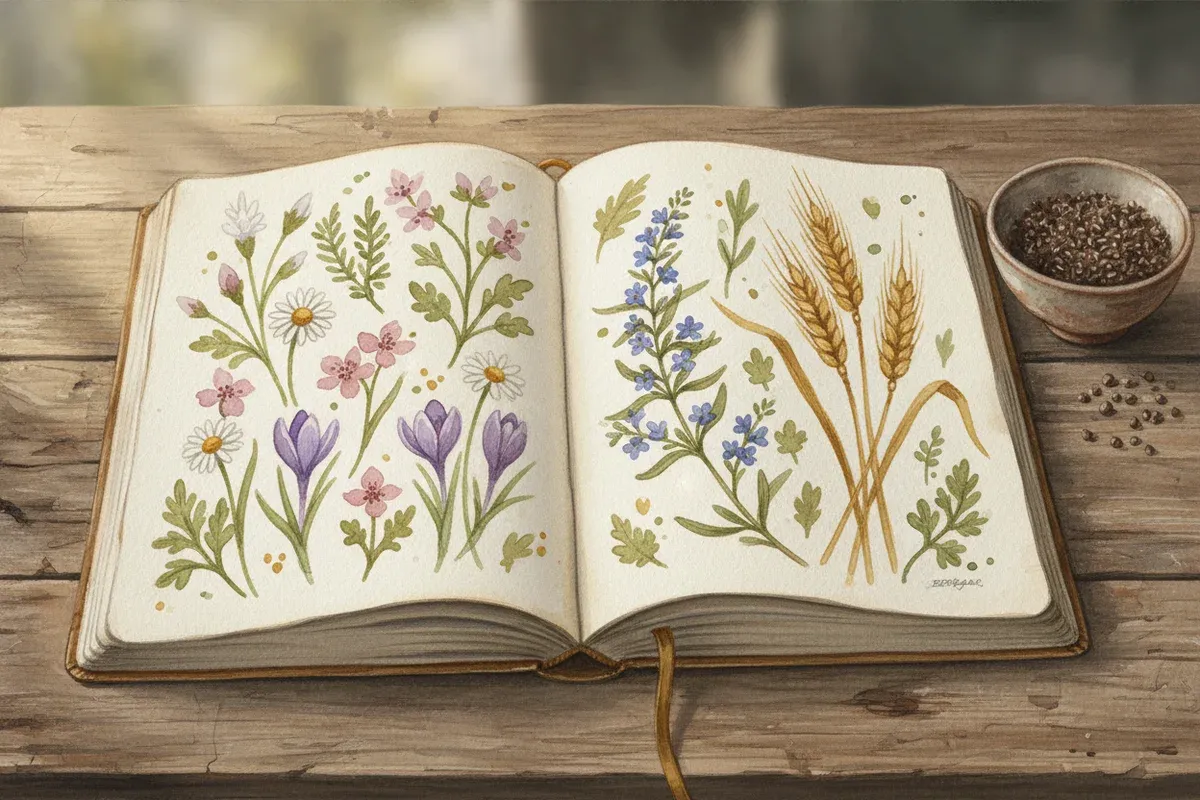
Head outside with your nature journals. What signs of spring can you find? Buds swelling on branches, birdsong returning, early wildflowers pushing through. Sketch what you see. Date your entries. Talk about why God chose spring for the Exodus — a season of new life, of things breaking free from the ground.
Weeks 2–3 before Passover: Gathering Bitter Herbs
Go to the store and gather Parsley, lettuce, or cilantro and plant them in your garden. These are maror (bitter herbs) — the herbs eaten at the seder to remember the bitterness of slavery in Egypt. Have your children measure and sketch the growth each day in their nature journals. By seder night, they'll place something on the table that they grew with their own hands.
Week 2 before Passover: Sprouting Grains
Soak wheat berries or barley in a shallow dish with a damp paper towel. Within days, you'll have sprouts. This connects to the omer (the sheaf offering) — the first barley harvest brought to the Temple during Passover week. Children can observe, sketch, and journal about how grain transforms from a dry seed to a living plant.
Week 1 before Passover: Farm Visit or Lamb Observation
If possible, visit a local farm to see spring lambs. The Passover lamb was selected on the tenth of Nisan — four days before the sacrifice — and kept close where the family could watch it. Even looking at photographs or reading a living book about sheep and lambs can open a conversation about what it meant to choose a lamb from your own flock.
Nature Journal Prompts
Keep these in your nature journal basket and pull one out each week during your Passover preparation:
- Sketch three signs of spring you can see from your front door. What is waking up? What is still sleeping?
- Draw your bitter herbs at three stages of growth. How do the leaves change shape as they get bigger?
- Press a wildflower into your journal by placing a heavy book on top of it. Write one sentence about why God might have chosen spring for the Exodus.
- Observe your sprouting grains closely. Sketch the roots and the shoot. What does the seed need to come alive?
- If you could add one thing from your garden or your nature walk to the seder plate, what would it be and why?
- Read Exodus 12:22 about the hyssop. Find a picture of hyssop and sketch it. How is it different from the herbs in your garden?
Living Books for the Exodus Story
Charlotte Mason was adamant: give children living books, not dry summaries. Here are some of our favorites for bringing the Exodus story to life across different ages:
Here are some of our favorite books for bringing the Exodus story to life:
- The Story of Passover by David Adler — simple, reverent retelling with beautiful illustrations
- Miriam at the River by Jane Yolen — the story of Baby Moses through Miriam's perspective
- Read directly from Exodus chapters 1–15 in a readable translation. Children this age can handle the real text, and it's far more powerful than any retelling.
- The Bronze Bow by Elizabeth George Speare — set in first-century Israel, rich with the longing for deliverance that echoes the Exodus
- Moses by Leonard Everett Fisher — the story of Moses beautifully illustrated
For the whole family: - A good Haggadah (the guidebook for the seder meal) with commentary. Read portions aloud during your Passover preparation — not just on seder night. Let the children narrate back what they remember.
From the Garden to the Seder Table
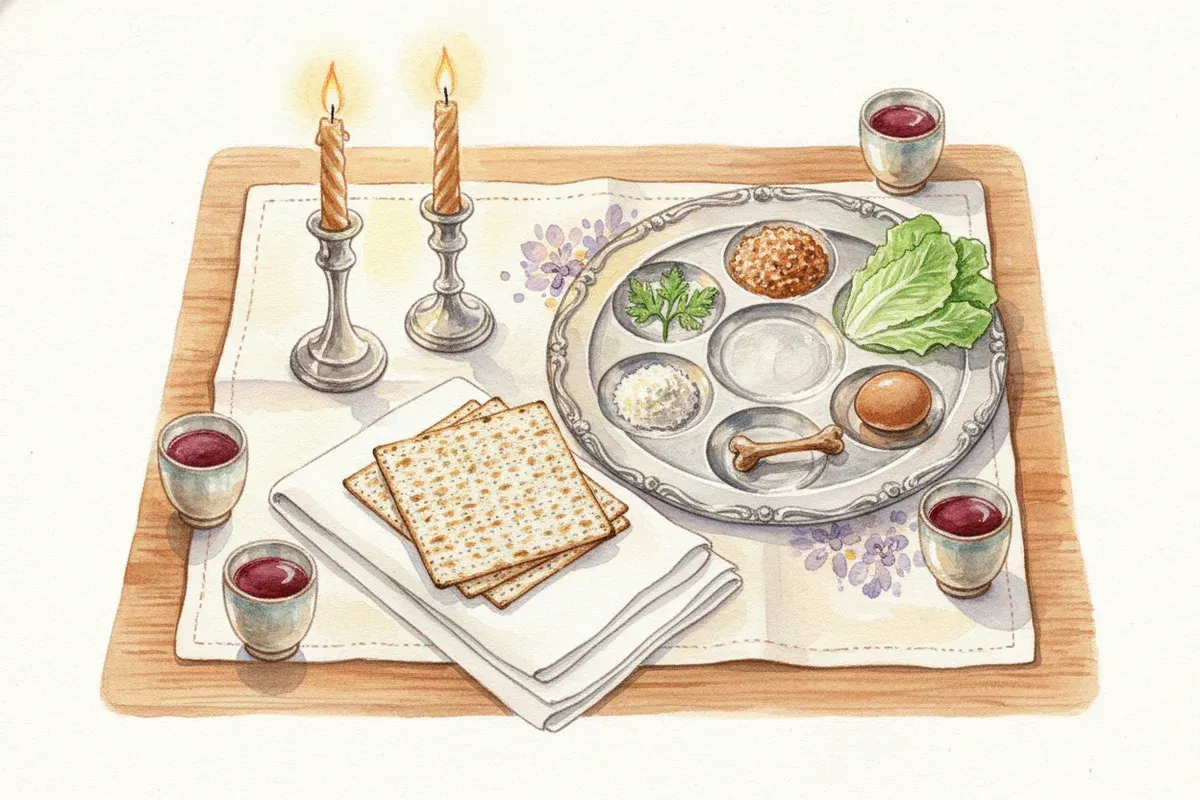
Here is where everything converges. On seder night, your child sits down at a table and sees:
- Maror — bitter herbs they planted, watered, and watched grow
- Karpas — parsley they grew on the windowsill, now dipped in salt water to remember the tears of slavery
- A roasted egg and shankbone — symbols of the Temple offerings, connecting to the lambs they learned about
- Matzah (unleavened bread) — flat bread made in haste, the bread of affliction and freedom at once
- Charoset — a sweet mixture of apples, nuts, and wine representing the mortar used by Israelite slaves
Every element on that plate has a story. And because your children have spent weeks observing, growing, sketching, and reading, those stories aren't abstract. They're alive. They're connected to dirt under fingernails and sketches in a journal and a tiny parsley plant on the windowsill.
This is what Charlotte Mason meant when she said education is the science of relations. The child who grows bitter herbs and reads Exodus and sketches spring lambs isn't just learning about Passover. They're living inside the story — connected to the land, the season, the text, and the God who ordained all of it.
Our Passover Activity Bundle for Kids includes 30+ pages of coloring, copywork from Exodus, plague headbands, a seder plate craft, and more — perfect for pairing with the nature study activities above.
This spring, let the garden teach the story. Let small hands dig in the dirt and press herbs between the pages of a journal. Let the season itself do what it was always meant to do — point your family back to the God who brings spring out of winter, life out of death, and freedom out of bondage.