Why We Tell the Passover Story Every Year
 By Jon5 min read
The Passover story isn't repetition for repetition's sake — it's a yearly reminder of God's faithfulness that deepens with every retelling around your family table.
Our children have heard the Passover story every spring for as long as they can remember. The parting of the sea. The lamb's blood on the doorposts. The bread that didn't have time to rise. They could tell it to you in their sleep.
And yet every year, when we sit down at the seder table and begin again — "We were slaves in Egypt, and the Lord brought us out with a mighty hand" — something new opens up.
That's the thing about Passover (Pesach — the biblical feast celebrating God's deliverance of Israel from Egypt). It was never meant to be heard once and filed away. It was meant to be told again. And again. And again.
Repetition Is the Point
We live in a culture that craves novelty. New content, new curriculum, new experiences. The idea of doing the same thing every single year can feel almost wasteful — especially to parents who are always searching for the next great resource or the next fresh approach.
But God didn't design the Passover as a one-time lesson. He designed it as an annual rehearsal of His faithfulness. Exodus 13:8 says, "You shall tell your son on that day, 'It is because of what the Lord did for me when I came out of Egypt.'" Not once. Every year. On that day.
There's a reason for this. We forget. Not the facts — our children can recite the ten plagues in order — but the weight of what God did. The daily grind of life has a way of obscuring the miracles we encounter every single day. Routine makes us comfortable. Comfort makes us forgetful.
The seder pulls us back. Every spring, it interrupts our forgetting and says: Remember. He was faithful then. He is faithful now. And He will continue to be faithful tomorrow.
What Deepens With Every Telling
When our oldest was four, the Passover story was about frogs and darkness and running away from a mean king. He colored pictures of the plagues and ate charoset (a sweet mixture of apples, nuts, and cinnamon) with his fingers. That was enough. That was beautiful.
At seven, he started asking harder questions. Why did God harden Pharaoh's heart? Why did the firstborn sons have to die? The story hadn't changed, but he had. He was ready for more of it.
Now, at ten, he sits at the seder and listens differently. He hears the ache in the story — the years of slavery before the deliverance came, the waiting, the not-yet. He connects it to his own life in small ways he couldn't have articulated at four. And when we read, "The Lord brought us out of Egypt with a mighty hand and an outstretched arm" (Deuteronomy 26:8), he understands — not just with his mind, but with something deeper — that God's faithfulness is not a single event. It's a pattern. A promise that holds across generations.
That understanding didn't come from a single dramatic teaching moment. It came from hearing the same story, at the same table, year after year, and growing into it.
It's Not About the Story Getting Old
Sometimes I hear parents worry that their children will get bored of the same holidays, the same readings, the same rituals. I understand the concern. But in our experience, the opposite has happened.
Our children don't roll their eyes at the seder. They lean in. They argue about who gets to ask the four questions. They hide the afikomen (the broken piece of matzah) with elaborate schemes. They add their own observations to the retelling — things they noticed this year that they didn't notice last year.
Because the story isn't static. They are changing, and the story meets them wherever they are.
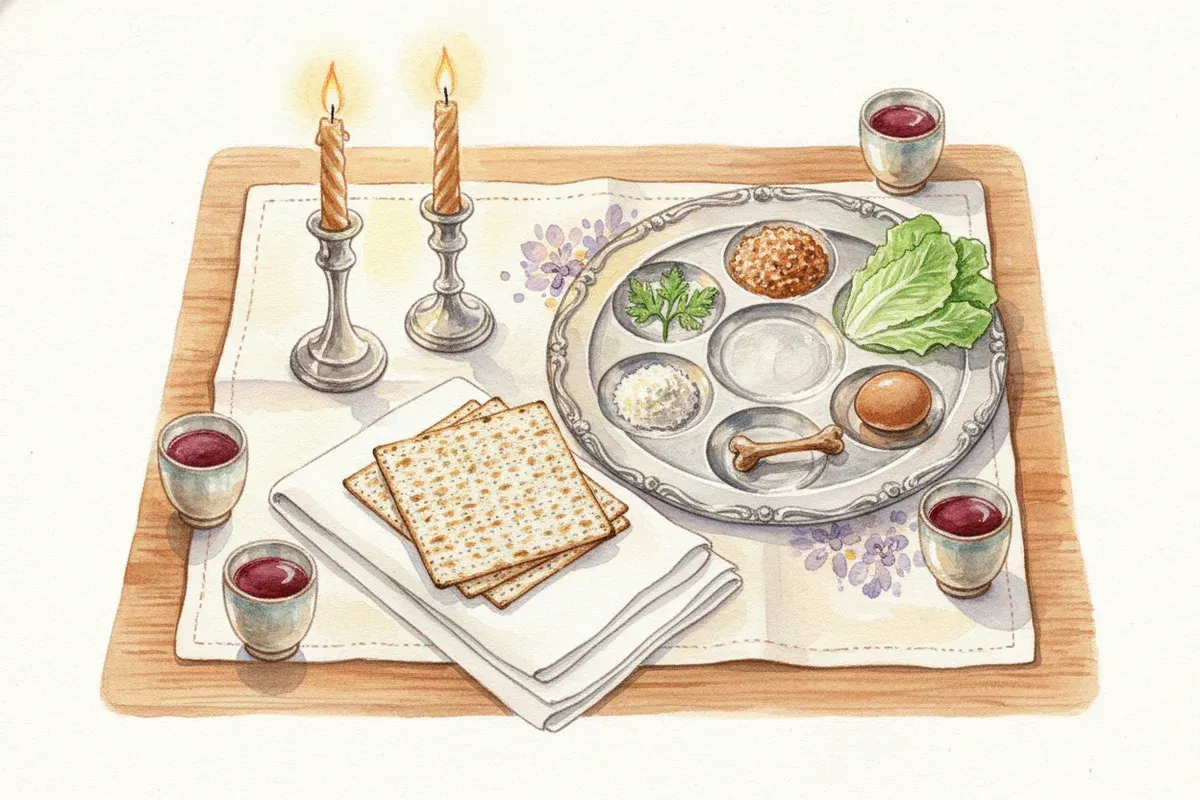
This is what liturgical repetition does. It creates a container that stays the same while the people inside it grow. The Haggadah (the guidebook for the seder meal) doesn't change, but the family reading it does. The bitter herbs taste the same, but the child tasting them carries a year's worth of new experience to the table.
And underneath all of it — underneath the candles and the matzah and the songs — is the same bedrock truth: God delivered His people. He was faithful. He is faithful still.
A Story That Grows With Your Family
If your children are young, the Passover story right now might look like coloring pages and grape juice and a simplified retelling at the kitchen table. That is more than enough. Our Passover Activity Bundle for Kids was designed for exactly this season — 30+ pages of coloring, copywork from Exodus, plague headbands, and hands-on activities that give small hands something to hold while the story takes root.
But here's what I want you to know: those same children, coloring those same plagues, will come back to this story next year with new eyes. And the year after that. And the year after that. The four-year-old who colors the parting of the sea today will be the twelve-year-old who leads the family in the four questions. The child who memorizes "The Lord brought us out" will be the teenager who understands what it means to wait for deliverance — and to trust that it's coming.
If you're looking for a place to begin, our Passover Activity Bundle for Kids is a companion resource with coloring pages, mazes, copywork from Exodus, and plague paper crafts to help bring the Passover story to life at your table. If this is your family's first seder, our guide to celebrating Passover with little ones walks through what to simplify and what to keep. And if you want to weave the Exodus story into your nature study this spring, our Charlotte Mason approach to Passover nature study connects the garden to the seder table.
The repetition isn't the obstacle. It's the gift.
Tell It Again This Year
Passover is almost here. And whether this is your first seder or your fifteenth, the invitation is the same: sit down, break the bread, and tell the story again.
Not because your children haven't heard it. But because they need to hear it again — and so do you. Because every retelling is a declaration that the God who brought His people out of Egypt with a mighty hand is the same God who is faithful to your family today. In this season. In this year. At this table.
Tell it again. Not because the story changes, but because it changes you.