Biblical Feasts · Purim

Purim Resources for Kids

Hand-illustrated Queen Esther printables, coloring pages, paper crafts, copywork, and Scripture activities — designed to bring the story of Esther alive for children with wonder, courage, and joy.

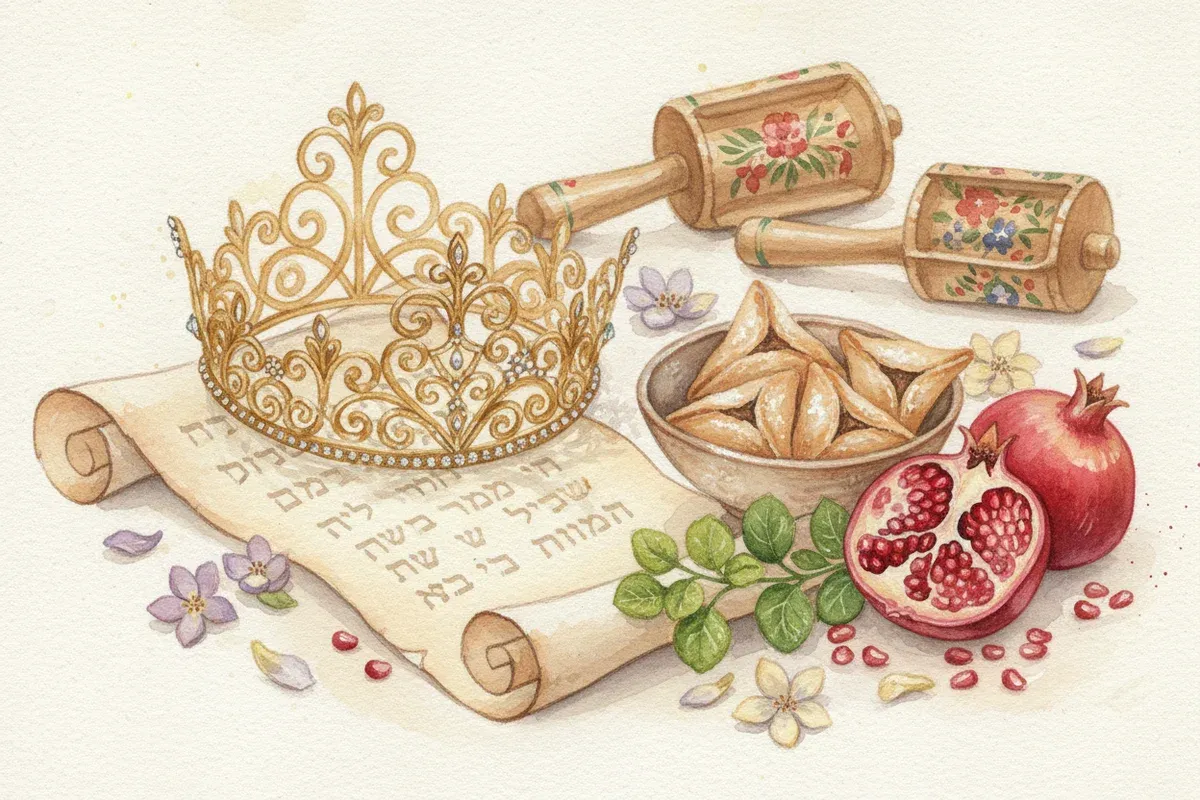
Watercolor painting of a Purim tableau with a gold crown resting on an open scroll, hamantaschen pastries, pomegranates, and spring blossoms

Free for Your Family

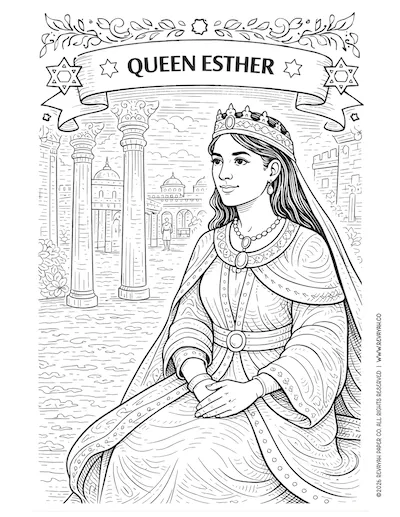
Free Queen Esther coloring page

Sign up for our newsletter and we’ll send a free hand-illustrated Queen Esther coloring page — ready to print and color this week.

Get the Free Page

What Is Purim?

Purim is the joyful biblical holiday that remembers how God used a young Jewish queen named Esther to rescue her people from destruction. The whole story is told in the book of Esther in the Bible — one of two books named after a woman, and uniquely, the only book where the name of God does not appear once. And yet His fingerprints are on every page.

The Jewish people were living in exile in Persia. A wicked man named Haman convinced King Ahasuerus to issue a decree that all the Jews in the kingdom would be destroyed on a single day. Lots (in Hebrew, purim) were cast to choose the day. But God had placed a young Jewish woman in the palace as queen. Mordecai, her cousin, told Esther that she had come to the kingdom “for such a time as this” (Esther 4:14). She prayed, she fasted, she went to the king at risk of her own life — and the people were saved.

The feast is called Purim because of the lots that Haman cast — lots meant for harm that God turned into a day of deliverance. Children love this story for good reason. It has a queen, a villain, a courageous girl, a king’s scepter, and a God who is never named but always at work.

Why Children Love the Story of Esther

Children are drawn to stories where ordinary people are asked to do brave things. Esther was young. She was an orphan. She lived in a land far from home. And when the moment came, she walked into the throne room knowing it could cost her everything. If I perish, I perish.

For our daughters, Esther shows what faithful courage looks like. For our sons, Mordecai shows the steady, watchful love of a guardian who will not bow. For all of them, the book teaches that God works in hidden ways — through cousins and queens, through banquets and sleepless nights, through the smallest details of an ordinary life turned over to Him.

That is the gift of teaching Purim to children. It plants the seed that God may be using their ordinary days to prepare them for something they cannot yet see. And a perpetual reminder that God always keep His promise to save and redeem the Jewish people.

How to Teach Purim to Kids

Purim is one of the easiest feasts to teach because the story itself is a child’s favorite. Add costumes, hamantaschen, and graggers, and the whole thing becomes a celebration. Here is the rhythm we’ve found works in our home.

1. Read the megillah (scroll of Esther) out loud

The book of Esther is short — you can read the whole thing in one sitting. Read it aloud. Use voices for Esther, Mordecai, the king, and Haman. Let your kids boo when Haman is named. The story is meant to be heard, not just studied.

2. Color and craft the story

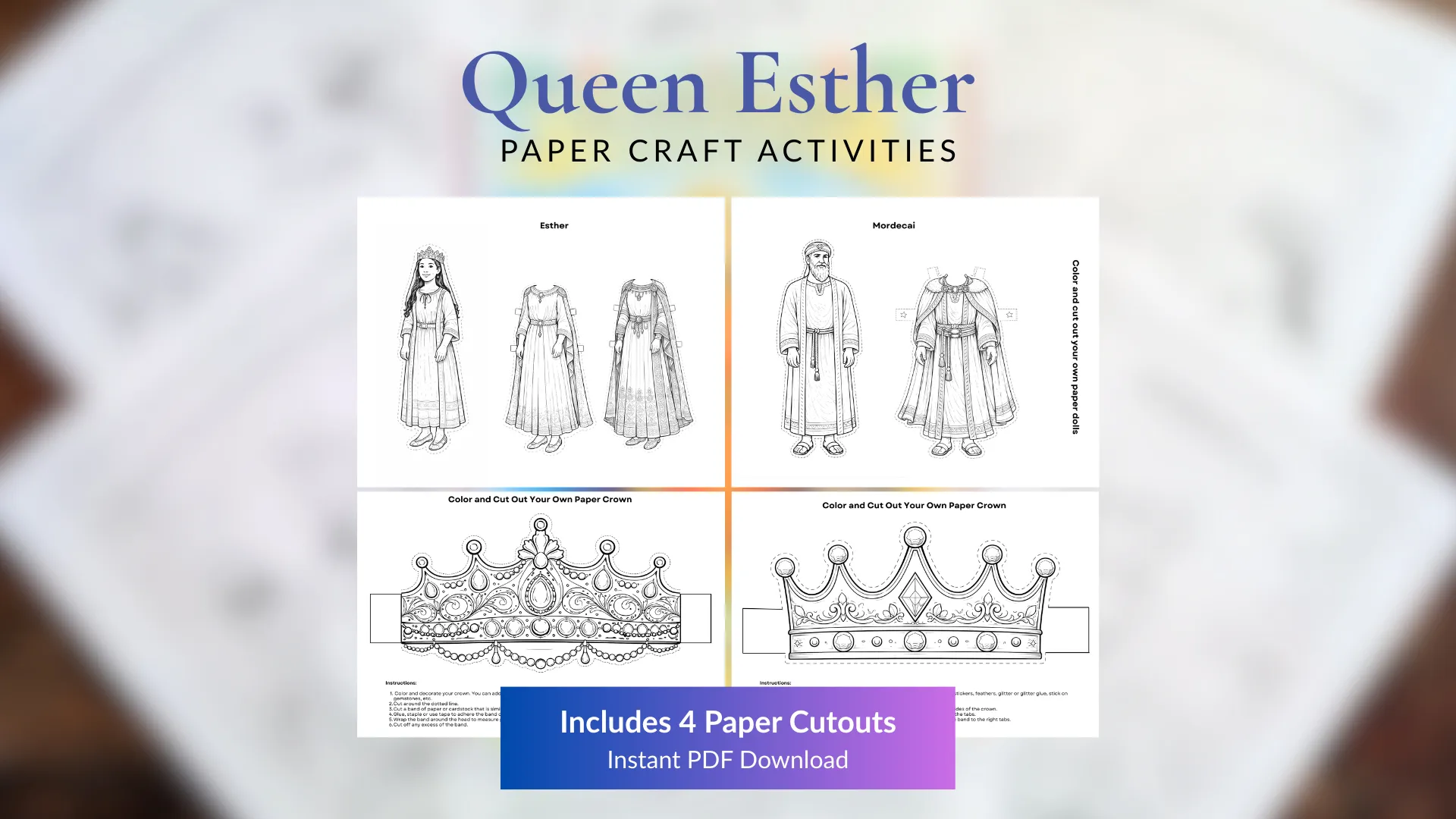
Bring out Queen Esther coloring pages and Esther and Mordecai paper crafts. Children retell what they color. The crown, the scepter, the scroll — each detail anchors the story in their minds.

3. Bake hamantaschen together

Hamantaschen (triangular cookies named for Haman’s hat or pockets) are the food of Purim. Even small children can press the dough into triangles and add a spoonful of jam. Flour-dusted aprons and sticky fingers are part of the feast.

4. Trace the story in copywork

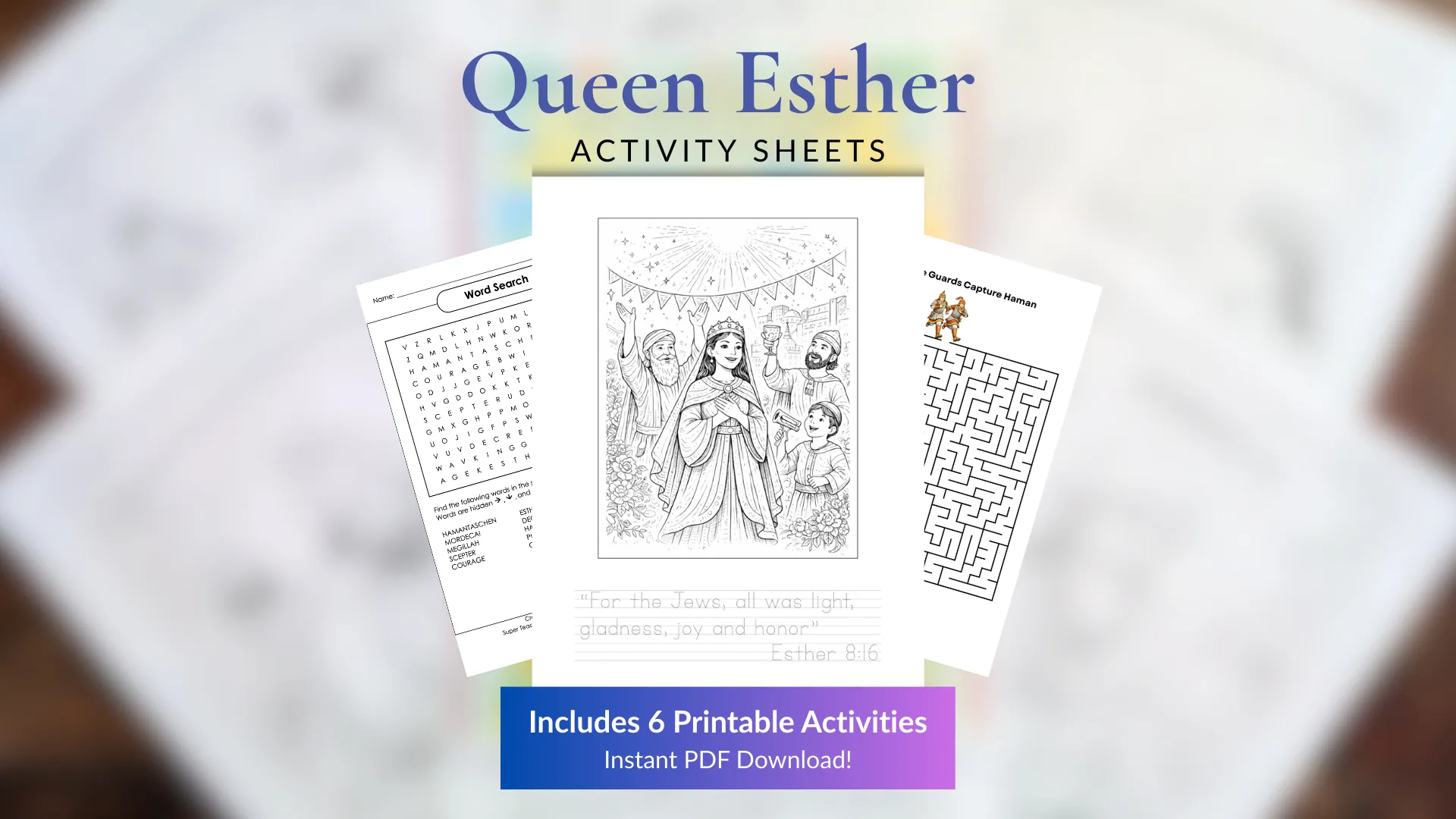
Older children can spend slow time in the text with Esther copywork and activity sheets — word searches, mazes, and Scripture passages from the book of Esther. Charlotte Mason–style attention.

5. Celebrate and give

Purim has four traditional commands: hear the megillah, share a festive meal, send food gifts to friends (mishloach manot), and give to the poor (matanot la’evyonim). Even small children can pack a little bag of cookies for a neighbor. Generosity is part of the feast.

Printable Purim Resources

Purim Activities and Printables for Kids

Hand-illustrated by our family. Print at home, print at your congregation, use them year after year.

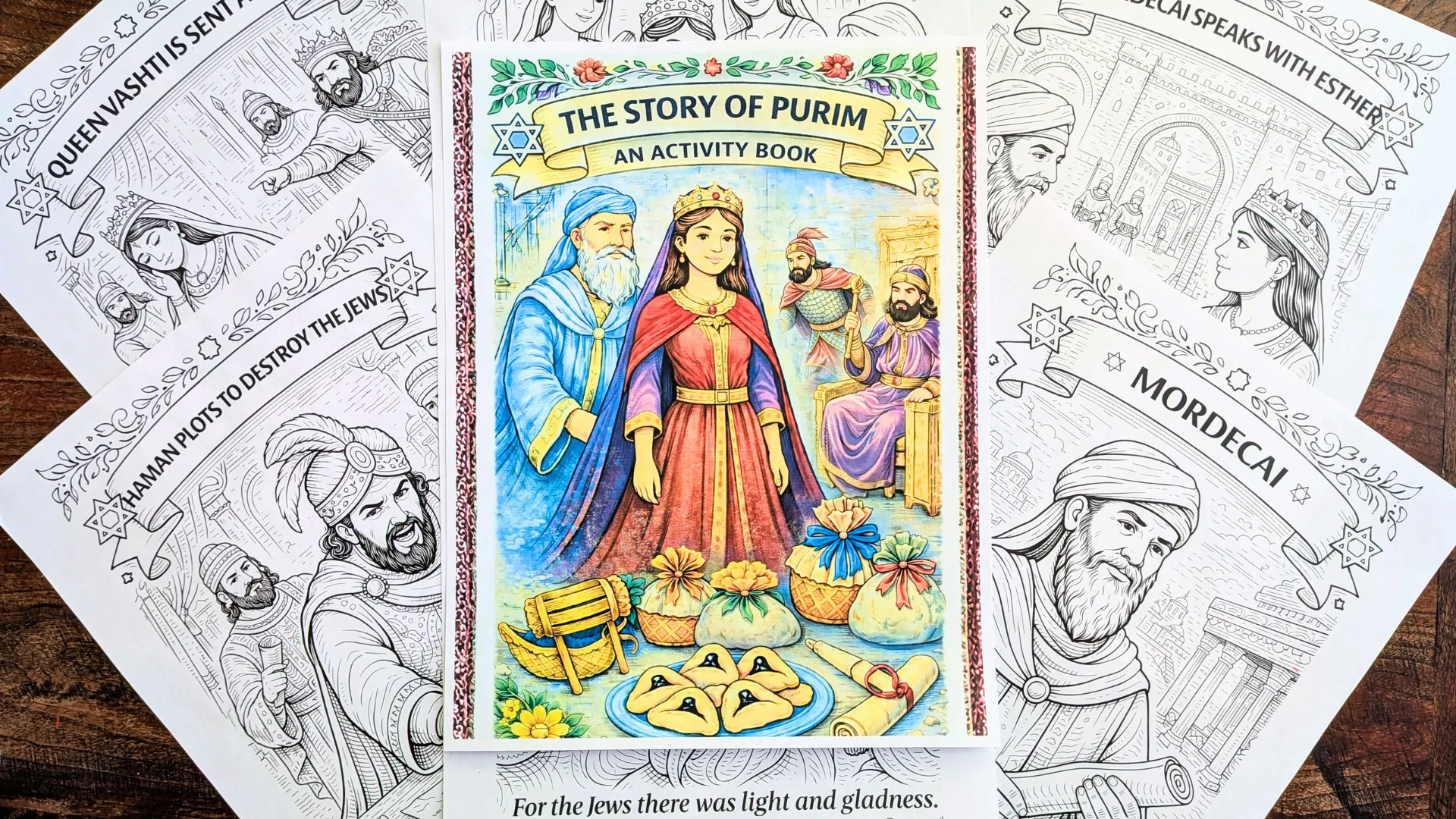
The Story of Purim coloring and activity book cover featuring Queen EstherPurim

Printable Purim Coloring & Activity Book

25+ pages of coloring, paper dolls, crowns, and scripture activities. Bring the story of Queen Esther to life for ages 4-12.

$9.99

View Details →
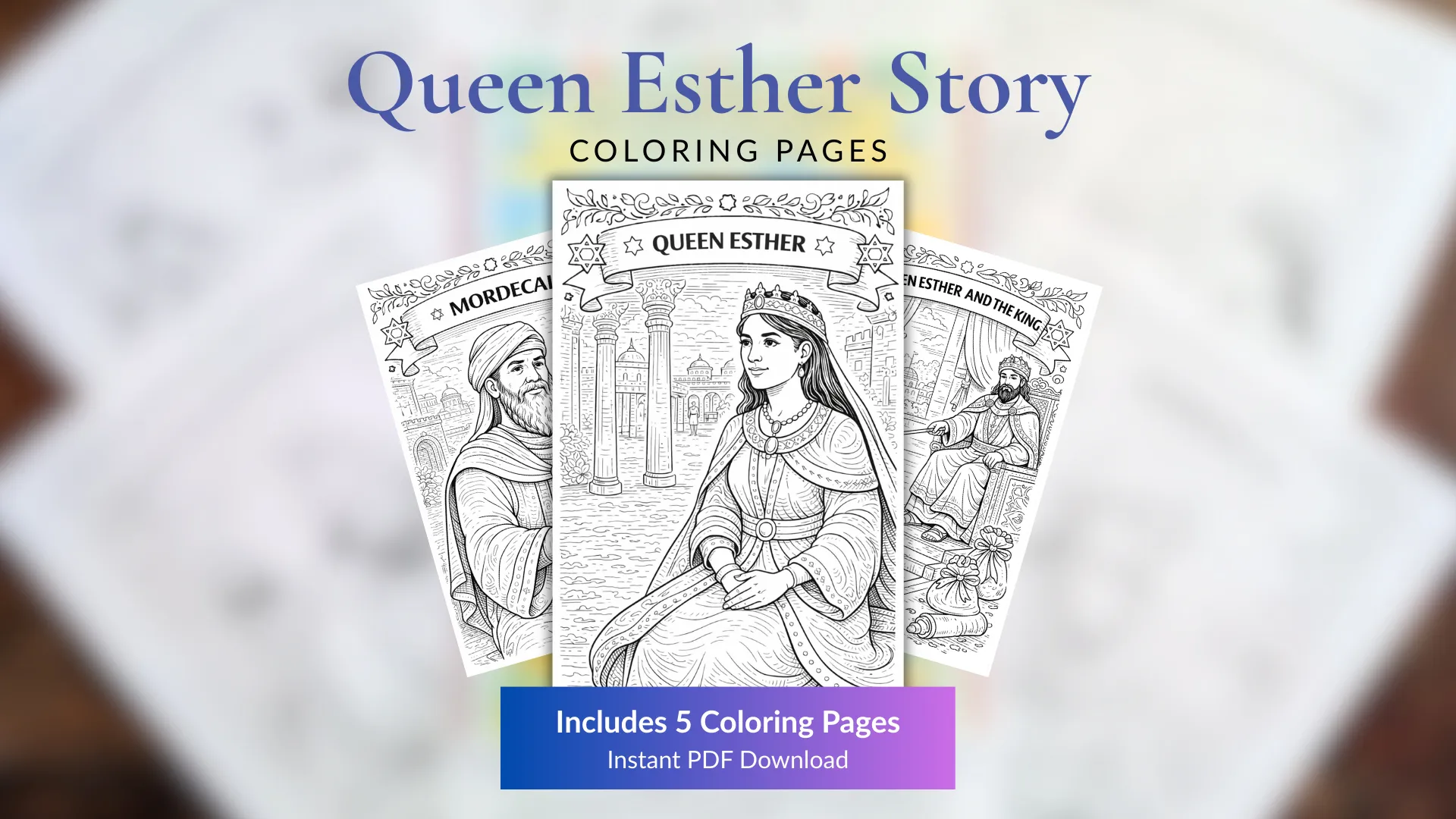
Queen Esther and Mordecai biblical coloring pages for kidsPurim

Queen Esther Story Coloring Pages

Six beautifully illustrated coloring pages featuring Queen Esther and Mordecai in key story moments — ideal for home, classroom, or ministry settings.

$3.99

View Details →
Printable Queen Esther and Mordecai paper doll and crown craft pagesPurim

Queen Esther & Mordecai Paper Doll and Crown Crafts

Color, cut, and play with four illustrated craft pages — paper dolls and crowns to bring the Purim story to life in your child's hands.

$2.99

View Details →
Queen Esther Bible copywork and activity sheets for kidsPurim

Queen Esther Bible Copywork & Activity Sheets

Five activity pages with a word search, narrative mazes, and scripture memory copywork drawn directly from the book of Esther.

$2.99

View Details →

Purim by Age Group

Ages 2–4

A simple Esther coloring page, a paper crown, a hamantaschen cookie, and the line “Esther was brave” repeated all week. Little ones don’t need much — they need it often.

Ages 5–8

Costumes, paper crafts, and acting out the story. Make the gragger. Bake the cookies. Let them be Esther and Mordecai. Children at this age remember the parts they live.

Ages 9–12

Read the megillah straight through. Talk about God’s hidden providence. Let them notice that His name never appears. Older children can also help bake, deliver gifts, and lead portions of the celebration.

Scripture Passages for Purim

The book of Esther is short enough to read in one or two sittings. Read a chapter a day with your family during the week of Purim.

  • Esther 2 — Esther is chosen as queen.
  • Esther 3 — Haman’s plot against the Jews.
  • Esther 4:14 — “Who knows whether you have not come to the kingdom for such a time as this?”
  • Esther 5–7 — Esther’s banquets and the king’s sleepless night.
  • Esther 9:20–22 — the establishment of Purim as a feast.
  • Romans 8:28 — God works all things together for good for those who love Him.
  • Proverbs 16:33 — the lot is cast, but its every decision is from the Lord.

From the Journal

Purim Reading for Parents

Related Topics: Courage, Providence, and Biblical Feasts

Purim sits in the wider rhythm of the biblical calendar. It comes in late winter, just before Passover (Pesach), and it teaches children one of the great truths of Scripture: God is at work even when we cannot see Him. That same thread — God’s hidden faithfulness — runs through every feast.

Explore our full library of Biblical Feasts for Kids or visit our Passover Resources for Kids hub for the next feast in the biblical calendar.

Frequently Asked Questions

What is Purim for kids?

Purim is the joyful biblical holiday that remembers how God used a young Jewish queen named Esther to rescue her people from a plot to destroy them. The story is told in the book of Esther in the Bible. For children, Purim is a feast of costumes, noisemakers, hamantaschen cookies, and the brave story of a girl who said, "If I perish, I perish" — and saved her people.

How do I explain the story of Esther to young children?

Tell it as a story of God's hidden hand. A young Jewish girl named Esther became queen of Persia. A man named Haman wanted to harm her people. Mordecai, her cousin, told her she had been placed in the palace "for such a time as this" (Esther 4:14). Esther was brave. She prayed, she fasted, and she went to the king. God protected her. Her people were saved. The book of Esther never names God directly — but His fingerprints are on every page. That is part of what we teach our children.

What are simple Purim activities for homeschool?

Read the megillah (the scroll of Esther) aloud. Make a paper crown. Bake hamantaschen (triangular cookies filled with jam). Color a Queen Esther coloring page. Act out the story with costumes. Make graggers (noisemakers) to use whenever Haman's name is read. Purim is built for hands-on learning — and children remember what they make and act out.

Why do families celebrate Purim?

Mordecai instructed the Jewish people to keep Purim every year as days of feasting, joy, sending gifts to one another, and giving to the poor (Esther 9:20–22). Families celebrate to remember God's faithfulness — that even when His name was not spoken, He was working. Purim is a feast of remembering, rejoicing, and generosity.

Is Purim in the Bible?

Yes. The whole story is told in the book of Esther in the Hebrew Bible (the Tanakh). It is one of two books in the Bible named after a woman, and uniquely, the name of God does not appear once — yet His providence is woven through every verse.

What can children learn from Queen Esther?

Courage, prayer, and trust in God's providence. Esther was young. She was afraid. But she stepped forward when her people needed her — and she did so with prayer and fasting first. Children learn that God places His people exactly where they are needed, even when they cannot see why.

Preview of the free hand-illustrated Queen Esther coloring page

Free Purim Printable

A free Queen Esther coloring page

Subscribe and we'll send you a hand-illustrated Queen Esther coloring page — a beautiful starting point for teaching the story of Esther this Purim.

  • Hand-illustrated by our family
  • Print as many times as you like
  • Free, with no purchase required

Send me the free Queen Esther coloring page

You'll also receive occasional notes from our family on living the biblical calendar with little ones. We never sell or share your information. Unsubscribe anytime.