 Family Life
5 min read
Creating a Sabbath Rhythm for Your Family
How we built a weekly Shabbat practice with five children — and why the imperfect, noisy, bread-crumb-covered version is exactly what our family needed.
Read More →
The Weekly Feast · Shabbat
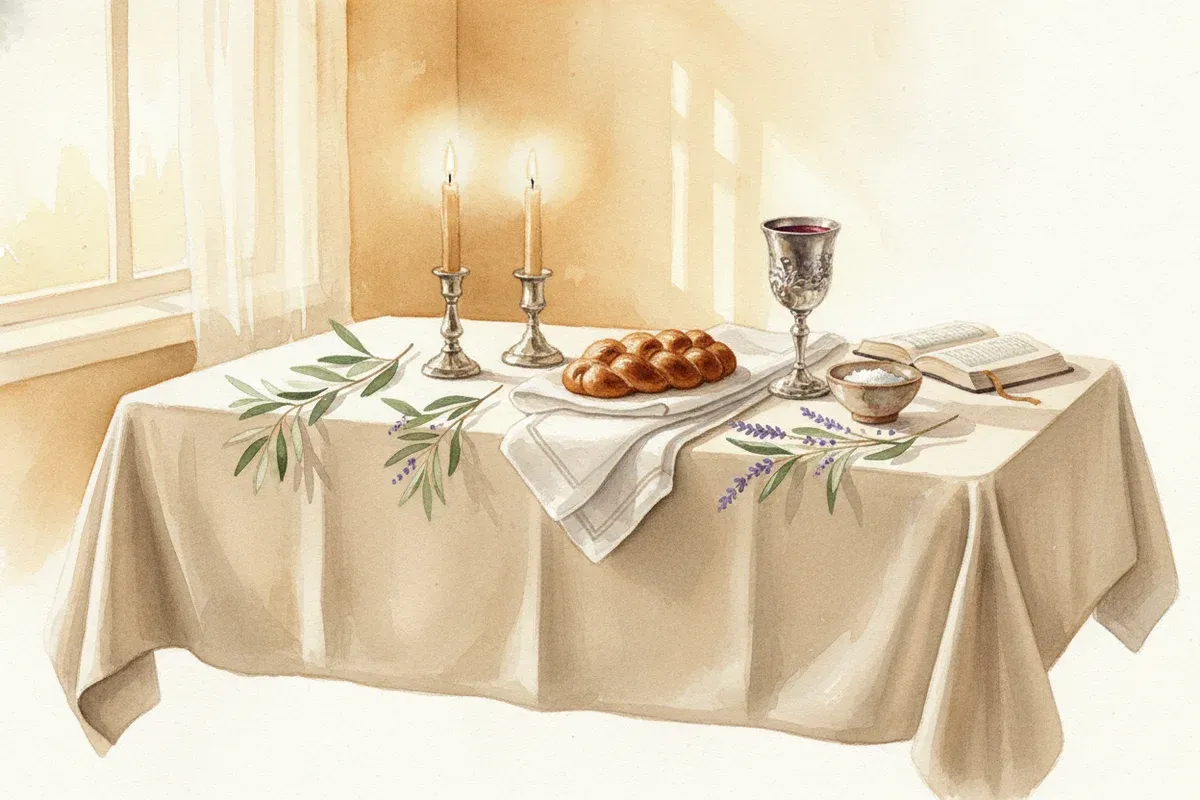
The seventh day — the weekly gift of rest, candles, and blessings at the family table. Begin a Messianic Shabbat rhythm with your children this Friday.
Free for Your Family
Subscribe and we’ll send our free Sabbath Family Starter Guide — candles, blessings, a simple Friday-evening rhythm, and a printable table card for your children.
Shabbat (the Sabbath) is the seventh day — the day God Himself rested after creating the world. Genesis 2:3 says He blessed the seventh day and made it holy. The Hebrew word shabbat means “to cease” or “to stop.” It is the day God invites His people to put down their work and simply be with Him.
Shabbat is older than the law of Moses. It is older than the annual feasts. It was given to humanity in the garden as a gift — a weekly rhythm of rest, presence, and shalom. When God gave the Ten Commandments at Mount Sinai, He included Shabbat as the fourth commandment. Since then it has been a sign of His covenant with the children of Israel, a weekly reminder that He is the One who gives His people rest and redemption.
For Messianic families, Shabbat is also a quiet picture of the rest we have in Yeshua and the rest still to come. Together, we join in with the Jewish family we’re grafted into as we embrace eternity in a day.
Children absorb the rhythm of their family. If the rhythm is always hurried and busy, they will rush through life. If the rhythm is a weekly pause — candles lit, bread broken, faces around a table, “the Lord bless you and keep you” spoken over their heads — that rhythm becomes the soundtrack of their childhood.
Shabbat is the easiest rhythm to begin and the most quietly transformative. You don’t need a perfect home, two candles, a complete theology, or a Hebrew vocabulary. You need the willingness to intentionally stop one day every week.
Children remember the candles long after they’ve forgotten most of what we said. The flame, the blessing, the small cup pushed across the table to them. This is holy. We are loved. The Lord is with us.
You don’t need to know Hebrew. You don’t need a perfect home. You need a candle, a piece of bread, a cup, and the willingness to stop. Here is the rhythm we’ve found works in our home with our five children.
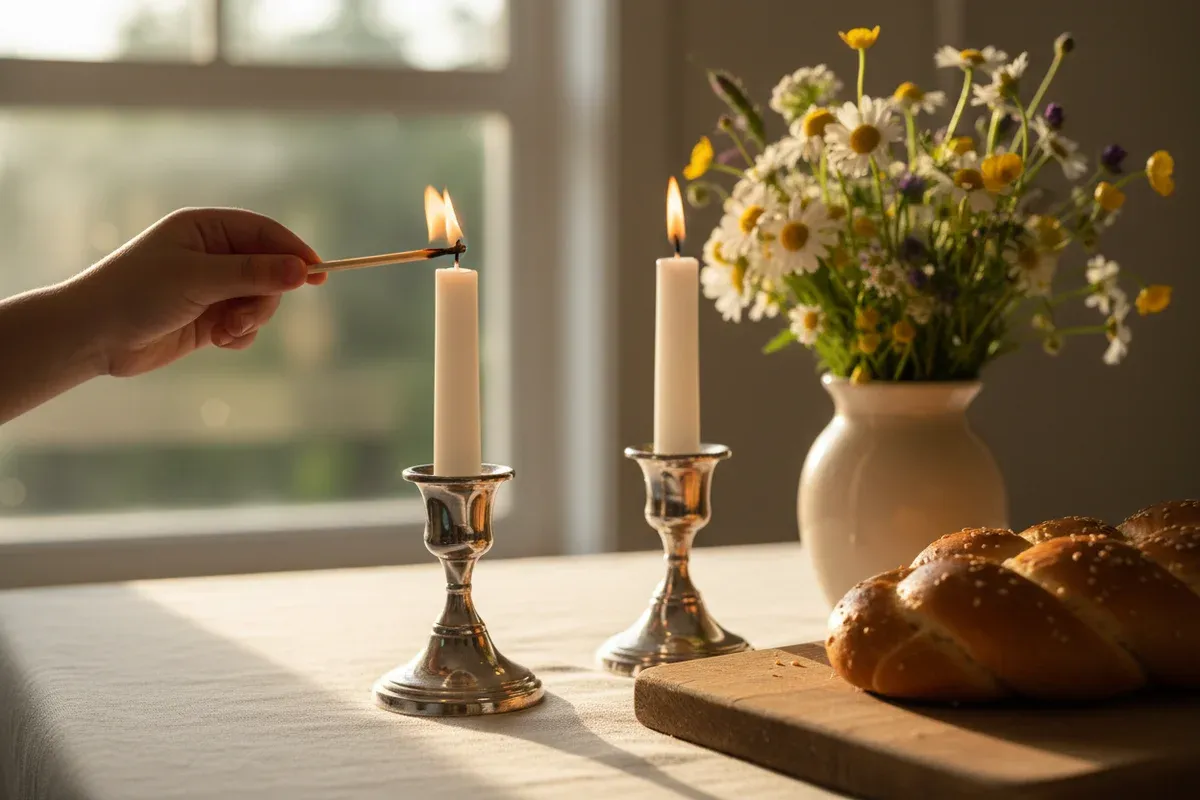
A few minutes before sundown on Friday, light two candles — one for “remember” (Exodus 20:8) and one for “observe” (Deuteronomy 5:12). The candles signal to the whole household that the work of the week is done.
Lift the cup. Speak the blessing over the wine or grape juice — declaring the seventh day holy. Even small children can join in. In our home, our youngest waits all week to hear the Kiddush. The free Sabbath guide includes the Hebrew with English transliteration.
Place your hand on each child’s head and speak the Aaronic blessing over them. The Lord bless you and keep you. The Lord make His face shine on you and be gracious to you. The Lord turn His face toward you and give you shalom. This is the moment they will remember.
Bless the challah, break it, and pass it. Eat together unhurriedly. Read Scripture. Sing if you can. Let the meal itself be the curriculum — conversation, laughter, faces around a table, the Word of God in the room.
Put down the to-do list and the devices. Take a walk. Read books together. Visit family. Pray. The point is not a list of forbidden activities — it is the gift of stopping. Children remember Shabbat as the day Mom and Dad were not in a hurry.
We don’t yet have a printable Shabbat product line. We do have something better as a starting point: the free Sabbath Family Starter Guide, designed for families with young children who want to begin a weekly Shabbat rhythm.
More Shabbat printables, copywork, and family liturgy tools are in the works. If you’d like to be the first to know when they launch, the guide signup is the place to start.
Read these passages with your children to root the rhythm of Shabbat in the Word.
From the Journal
Family LifeHow we built a weekly Shabbat practice with five children — and why the imperfect, noisy, bread-crumb-covered version is exactly what our family needed.
Read More →Shabbat is the weekly anchor of the biblical year. The annual feasts — Passover, Shavuot, Sukkot, and the others — are built on the same rhythm of stopping, remembering, and rejoicing. When you keep Shabbat, you are already practicing the rhythm of every other feast God appointed.
Explore the rest of our Biblical Feasts for Kids library, or visit the Passover hub to begin with the first annual feast of the biblical year.
Shabbat (the Sabbath) is the seventh day of the week — the day God Himself rested after creating the world (Genesis 2:3). For families, Shabbat is a weekly rhythm of stopping work, lighting candles, blessing the bread and the cup, gathering around the table, and resting together. The Hebrew word shabbat means "to cease" or "to stop."
Shabbat is listed among the appointed times in Leviticus 23, but it is not an annual feast — it is the weekly feast. Every seven days, God invites His people to rest with Him. The annual feasts (Passover, Shavuot, Sukkot, and the others) are built on the same rhythm of stopping and remembering, and Shabbat is the foundation of them all.
On Friday evening, just before sundown, the family gathers. Two candles are lit (one for "remember" and one for "observe" — Exodus 20:8 and Deuteronomy 5:12). The traditional Hebrew blessings are sung over the candles, the children, the bread (challah), and the cup of wine or grape juice (Kiddush). The family eats slowly, reads Scripture, sings, and rests through Saturday. For Messianic families, Shabbat is also a quiet picture of the rest we have in Yeshua.
Start with one Friday evening. Set the table simply. Light two candles a few minutes before sundown. Bless the bread, bless the cup, bless the children. Eat together, slowly. Sing if you can. Read Scripture. Then put down your devices and rest. Our free Sabbath Family Starter Guide walks you through every step — the blessings, the rhythm, and a printable table card for your kids.
Kiddush (which means "sanctification" in Hebrew) is the prayer that opens Shabbat. It is spoken or sung over a cup of wine or grape juice on Friday evening, declaring the seventh day holy and remembering both creation and redemption.
Anything that is restful and joyful. Read books together. Take a walk. Play in the yard. Sing. Pray. Visit family. Eat slowly. Light a candle. The point is not a list of forbidden activities — it is the gift of stopping. Children remember Shabbat as the day Mom and Dad were not in a hurry.
Because Shabbat is older than the law of Moses. It is older than the feasts. It was given to Adam & Eve in the garden as a gift before any covenant was cut. We keep Shabbat because God Himself rested on the seventh day and called it holy, because Yeshua kept Shabbat with His disciples, and we join in with the Jewish people who have guarded the Sabbath for centuries because the rhythm of weekly rest is one of the great gifts God gave to His people.
Free Family Guide
Subscribe and we'll send you our free Sabbath Family Starter Guide — candles, blessings, a simple Friday-evening rhythm, and a printable table card for your children.
Send me the free Sabbath Family Starter Guide
You'll also receive occasional notes from our family on living the biblical calendar with little ones. We never sell or share your information. Unsubscribe anytime.