Counting the Omer and the Feast of Shavuot
 By Jon6 min read
Counting the Omer is the fifty-day walk from Yeshua's resurrection to Shavuot—a quiet rhythm of Scripture, harvest, and the Spirit poured out at Pentecost.
There is a long, quiet stretch of the biblical calendar that almost no one talks about.
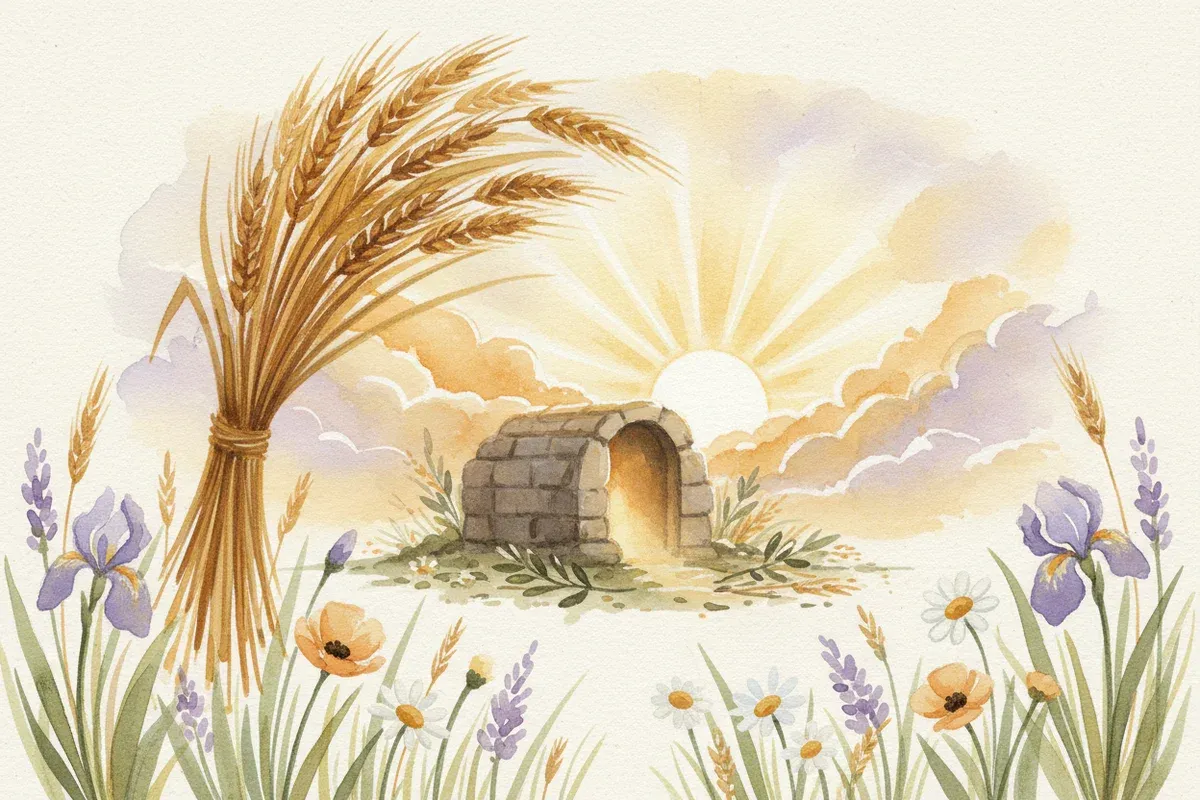
It begins on the morning of the Resurrection—the morning of Yom HaBikkurim (the Feast of Firstfruits), when a single sheaf of barley was waved before the Lord. And it ends fifty days later, on a mountain wrapped in fire, with the giving of the Torah and, centuries later, the giving of the Spirit. Between those two bookends, Israel was given an unusual command: count.
Count each evening. Count each morning. Don't lose your place.
This is the Counting of the Omer (Sefirat HaOmer in Hebrew)—and the feast it builds toward is Shavuot (the Feast of Weeks, also called Pentecost). It is one of the most overlooked seasons in the biblical calendar, and one of the richest gifts our family has ever brought into our homeschool year.
What Counting the Omer Is
The instruction is in Leviticus 23:15–16: "From the day after the Sabbath, the day you brought the sheaf of the wave offering, count off seven full weeks. Count off fifty days up to the day after the seventh Sabbath."
An omer is a small unit of measure—about the volume of a sheaf of grain. The wave offering of Firstfruits was an omer of barley. And from that morning, Israel begins counting the days, one at a time, all the way to the wheat harvest fifty days later.
Each evening the count is spoken aloud: "Today is the first day of the Omer." "Today is the second day." "Today is seven days, which is one week." It is one of the few commands in Scripture that is fundamentally about time—about waiting, about staying awake to the rhythm God set in motion.
Seven weeks of seven days, plus one. Seven weeks of expectation, ending in the eighth day—the day of new things.
From Firstfruits to Sinai
To understand what we are counting toward, we have to look back at the story.
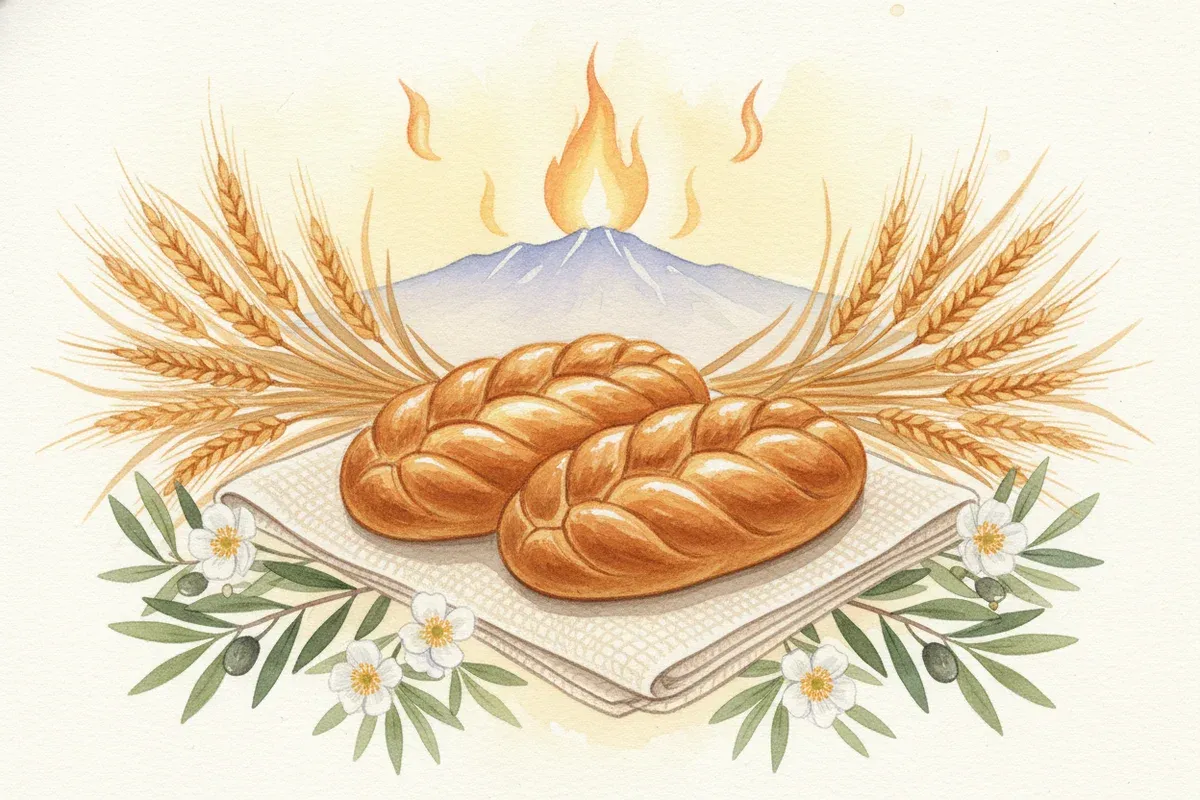
After Passover, after the Red Sea, Israel walks into the wilderness. They are no longer slaves, but they are not yet a people with a covenant in their hands. They walk for fifty days. And on the fiftieth day they arrive at Mount Sinai, and God descends on the mountain in fire and gives them the Torah.
The rabbis have long taught that Shavuot is the anniversary of that giving—the day God married His people at Sinai. The same God who pulled them out of Egypt with an outstretched arm now stoops down to write His instructions on stone.
The Counting of the Omer, then, is not a clock waiting for a holiday. It is a journey. Each day is one more step out of slavery and one more step toward the mountain. It is the Father walking His children home and teaching them, one day at a time, what it means to belong to Him.
For a homeschooling family, this is a remarkable gift. Fifty days is not a feast—it is a season. A long enough stretch to actually let something take root.
Shavuot—The Feast of Weeks
When the count is finished, Shavuot arrives.
In Hebrew, Shavuot simply means "weeks." Seven weeks counted, fifty days fulfilled. The Greek word Pentecost, used throughout the New Testament, means "fiftieth." Same feast, two names.
It is one of the three pilgrim feasts—the appointed times when Israel was commanded to come up to Jerusalem and rejoice before the Lord (Deuteronomy 16:16). At Shavuot, families brought the firstfruits of the wheat harvest. Two loaves of leavened bread were waved before the Lord—the only leavened offering in the entire sacrificial system.
Two loaves. Leavened. Lifted up together.
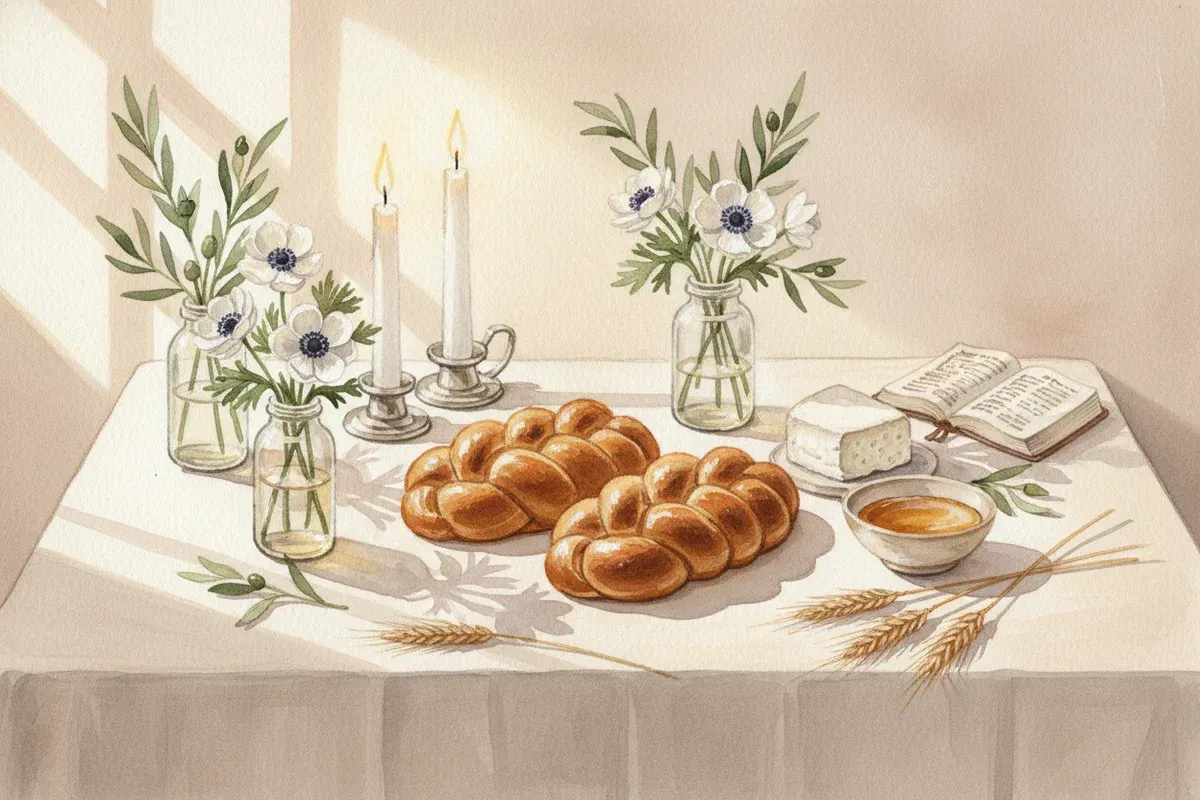
It is a feast of harvest, a feast of Torah, and a feast of joy. Tradition has families staying up late to read Scripture together, decorating their homes with greenery to remember Sinai, and eating dairy foods—a quiet nod to the milk and honey of the promised land. Many families also read the book of Ruth, the Gentile woman who, in the season of the wheat harvest, was grafted into the people of God.
That last detail is not a coincidence.
The Spirit Poured Out
Now read Acts 2.
Yeshua has risen. He has appeared to His disciples for forty days. He has ascended. And the small band of followers He left behind is gathered in Jerusalem, waiting—counting, though they may not have realized it.
"When the day of Pentecost came, they were all together in one place" (Acts 2:1).
Not a random Sunday. Shavuot. The fiftieth day. The same feast, the same morning, the same Jerusalem packed with pilgrims who had come up to celebrate the giving of the Torah at Sinai.
And on that morning the Spirit fell. Tongues of fire rested on each of them. The Torah that had once been written on stone was now written on hearts. The two loaves had become a people—Jew and Gentile together, leavened, lifted up before the Lord as firstfruits of the harvest of the nations.
Shavuot is not a Jewish holiday and a Christian holiday standing next to each other. It is one feast—God's feast—rooted in Jewish tradition with one breathtaking story moving through it.
Counting With Your Family
If you have never counted the Omer before, this is the easiest feast in the world to begin.
Start the night after the Resurrection. On the evening of the day Yeshua rose (the same morning as Yom HaBikkurim), say together: "Today is the first day of the Omer." That is it. That is the whole practice on day one.
Use a counter little hands can touch. A simple chart on the fridge, a chain of paper links the children remove each evening, a glass jar with fifty marbles to move from one side to the other. We have used a wall calendar with checkmarks, and we have used a long paper chain. Both worked.
Read a small portion each day. Pick a short passage—the Ten Commandments broken into pieces, the book of Ruth, or selections from Deuteronomy—and read one piece each evening. By Shavuot, your family has walked through real Scripture together, slowly, the way it was meant to be received.
Bake two loaves on the fiftieth day. Leavened. Eat them at your Shavuot table and remember the harvest, the giving of the Torah, and the giving of the Spirit. Talk about all three.
Keep it gentle. Fifty days is long. Some evenings you will forget. That is fine. Pick the count back up the next night and keep going. The point is not perfection. The point is that your family is walking together, day by day, toward the mountain.
If you are new to the biblical calendar, our guide to the Feast of Firstfruits and the Resurrection is the natural place to begin—Shavuot grows directly out of that first sheaf. And if you are looking for a deeper rhythm to anchor your family's year, our homeschool philosophy walks through how the biblical feasts shape our weeks.
A Long Walk Home
Counting the Omer is the long, quiet walk between two miracles.
It begins with a tomb that could not hold its Guest. It ends with a wind that could not be contained. In between is fifty days of ordinary evenings—children counting, parents whispering Scripture, bread rising, time moving.
That is the rhythm God gave His people. Not a sprint between holidays. A walk. One day at a time, all the way to the mountain.
Today is one day of the Omer.
Tomorrow is two.