 Biblical Feasts
7 min read
How to Celebrate a Messianic Shavuot With Little Ones
A practical, step-by-step guide to celebrating a Messianic Shavuot with little ones at home—Sinai, Ruth, and the Spirit poured out on Pentecost.
Read More →
Biblical Feasts · Shavuot
Hand-illustrated Messianic Shavuot printables, coloring pages, 10 Commandments crafts, scripture copywork, and Pentecost activities — designed to bring the Feast of Weeks to life for children with wonder, fire, and joy.
Free for Your Family
Subscribe and we’ll send you a hand-illustrated Counting the Omer activity for kids — a printable chart and a daily Scripture rhythm for the fifty days from Firstfruits to Shavuot.
Shavuot (pronounced shah-voo-OAT) means “weeks” in Hebrew. It is the biblical feast that falls fifty days after Firstfruits (Yom HaBikkurim) — counted out one day at a time during the Counting of the Omer. Leviticus 23 calls it the Feast of Weeks. The New Testament calls it Pentecost, from the Greek word for “fiftieth.” Same feast. Two names.
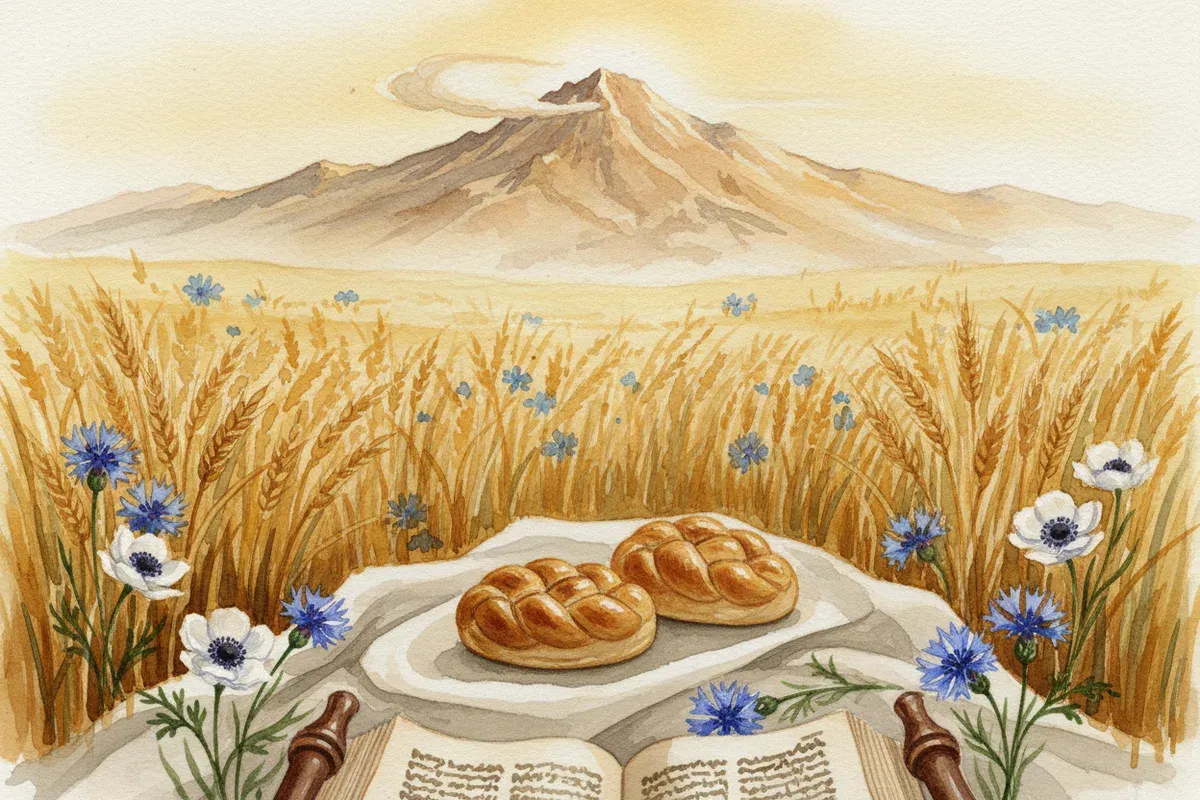
Shavuot is the day the children of Israel arrived at Mount Sinai, fifty days after the Exodus from Egypt, where God descended on the mountain in fire and gave them the 10 commandments. The rabbis have long taught that this is the day God married His people. The same God who pulled Israel out of Egypt with an outstretched arm stooped down to write His instructions on stone.
Centuries later, the small band of Jewish followers Yeshua left behind were gathered in Jerusalem to celebrate Shavuot when the Spirit fell. Tongues of fire rested on each of them. The 10 commandments once written on stone was now written on hearts. Acts 2 happened on the same morning Jewish pilgrims had come up to celebrate the giving of the Torah at Sinai. It is one feast, one breathtaking story moving through it.
Children love stories with fire and thunder. Shavuot has both. The mountain shakes. God descends in cloud and flame. He speaks ten words that have shaped the world ever since. And the people stand below, trembling, listening, becoming a covenant nation.
They also love the quieter half of the story. Ruth, a young Moabite woman, foreign and alone, chooses the God of Israel in the season of the wheat harvest and is grafted into His people. For Gentile children especially, this is the moment they meet themselves in the story. They are the harvest of the nations spoken of in Acts 2.
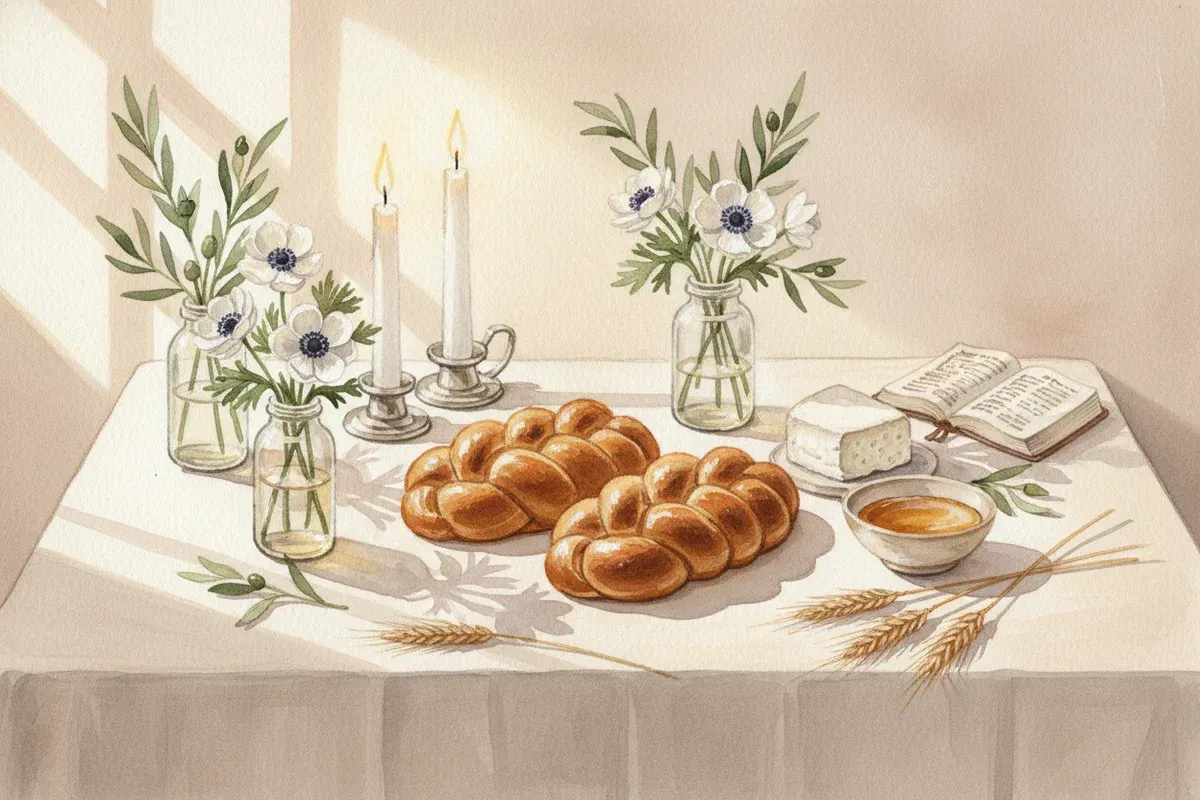
And they love the bread. Shavuot is one of the only feasts where God commanded two loaves of leavened bread to be waved before Him. Children can bake them. Children can eat them. The theology is in their hands.
Shavuot rewards a slow approach. The Counting of the Omer gives you fifty days to prepare — one short reading, one quiet ritual a day. Here is the rhythm we’ve found works in our home.
Beginning the evening after the Resurrection, say together each night: “Today is the first day of the Omer.” Use a paper chain, a wall calendar, or a jar of fifty marbles. Fifty quiet evenings of preparation. Read more in our journal post on Counting the Omer and the Feast of Shavuot.
At the family table on Shavuot, read the giving of the Torah at Sinai and the giving of the Spirit at Pentecost back to back. Let your children hear both passages and make the connection. The fire on the mountain. The fire on the disciples. Same feast. Same God.
Bring out our Messianic Shavuot activity bundle. Coloring pages of Sinai, paper crafts of the two stone tablets, copywork from Ruth and Acts, and word searches drawn from the story. Children retell what their hands have made.
Bake two small loaves of leavened bread (challah works beautifully) and eat them at your Shavuot table. While the dough rises, read the book of Ruth aloud — the Moabite woman whose story is set in the wheat harvest, the very season of Shavuot. A picture of the nations grafted in.
Many families decorate their homes with greenery on Shavuot to remember the flowering of Sinai. Some stay up late (the tradition is called Tikkun Leil Shavuot) reading Scripture together as a family. Even fifteen extra minutes with the lights low and a candle lit is enough to mark the night.
Printable Shavuot Resources
Hand-illustrated by our family. Print at home, print at your congregation, use them year after year.
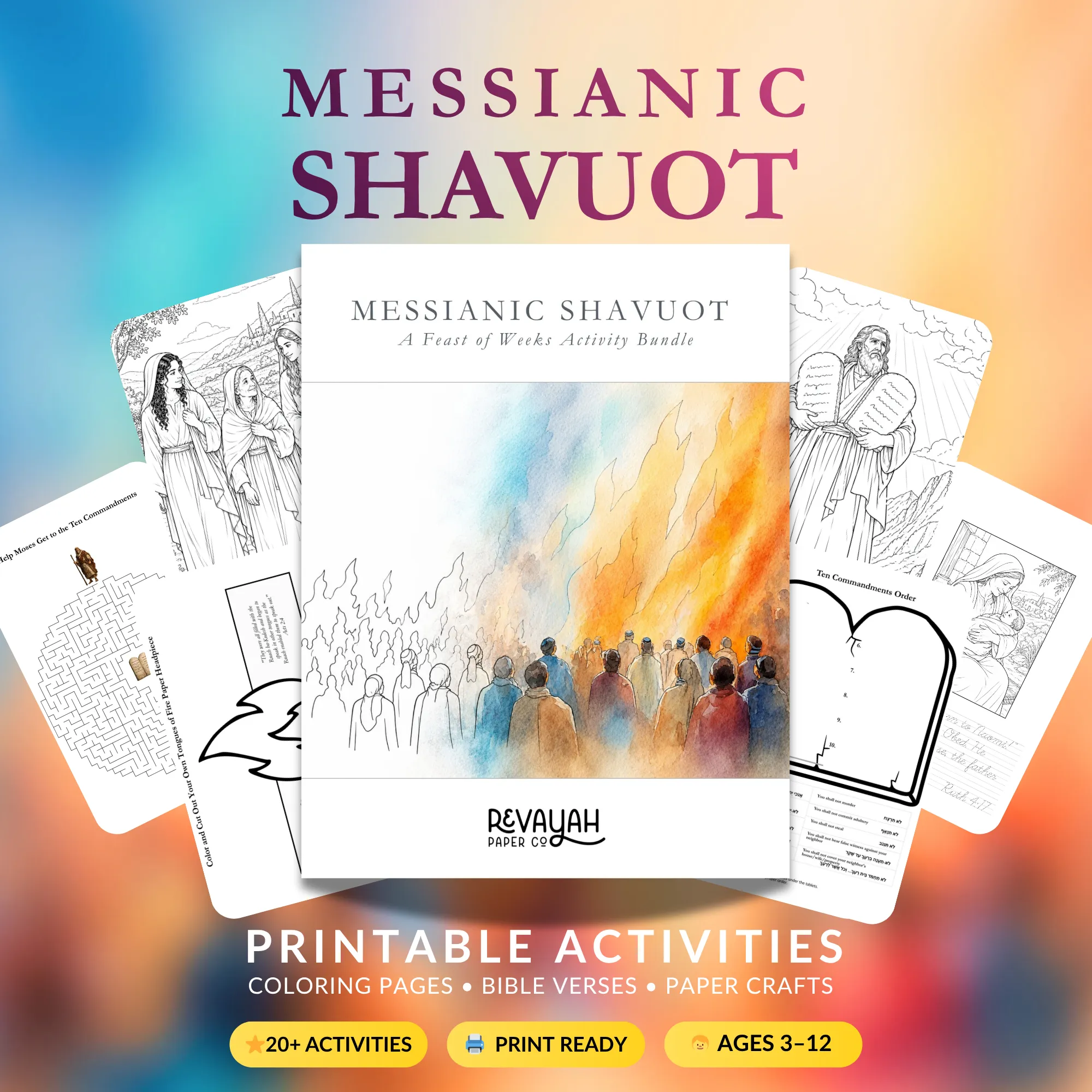
The Complete Bundle
Everything below in one downloadable PDF. Coloring, copywork, paper crafts, mazes, and word searches for the full Feast of Weeks.
Or Pick What You Need
Each of these is also included in the bundle above. Grab one on its own if that’s all you need.
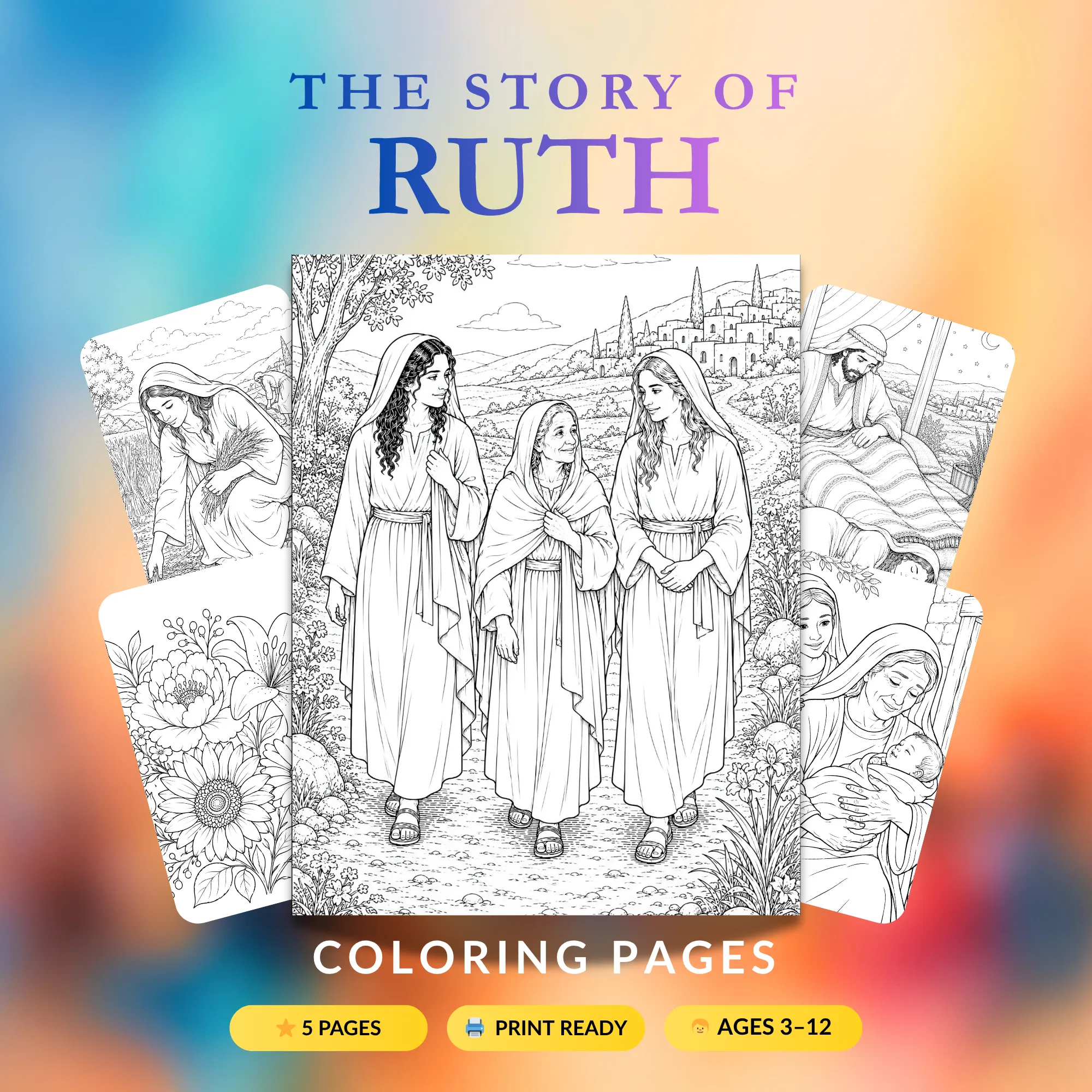 Shavuot
5 beautifully illustrated coloring pages for kids — Ruth and Naomi, the barley harvest, Boaz the kinsman-redeemer, and Ruth's place in the family line that leads to Yeshua. Read every year on Shavuot, the Feast of Weeks. Ages 4–12.
$2.49
View Details →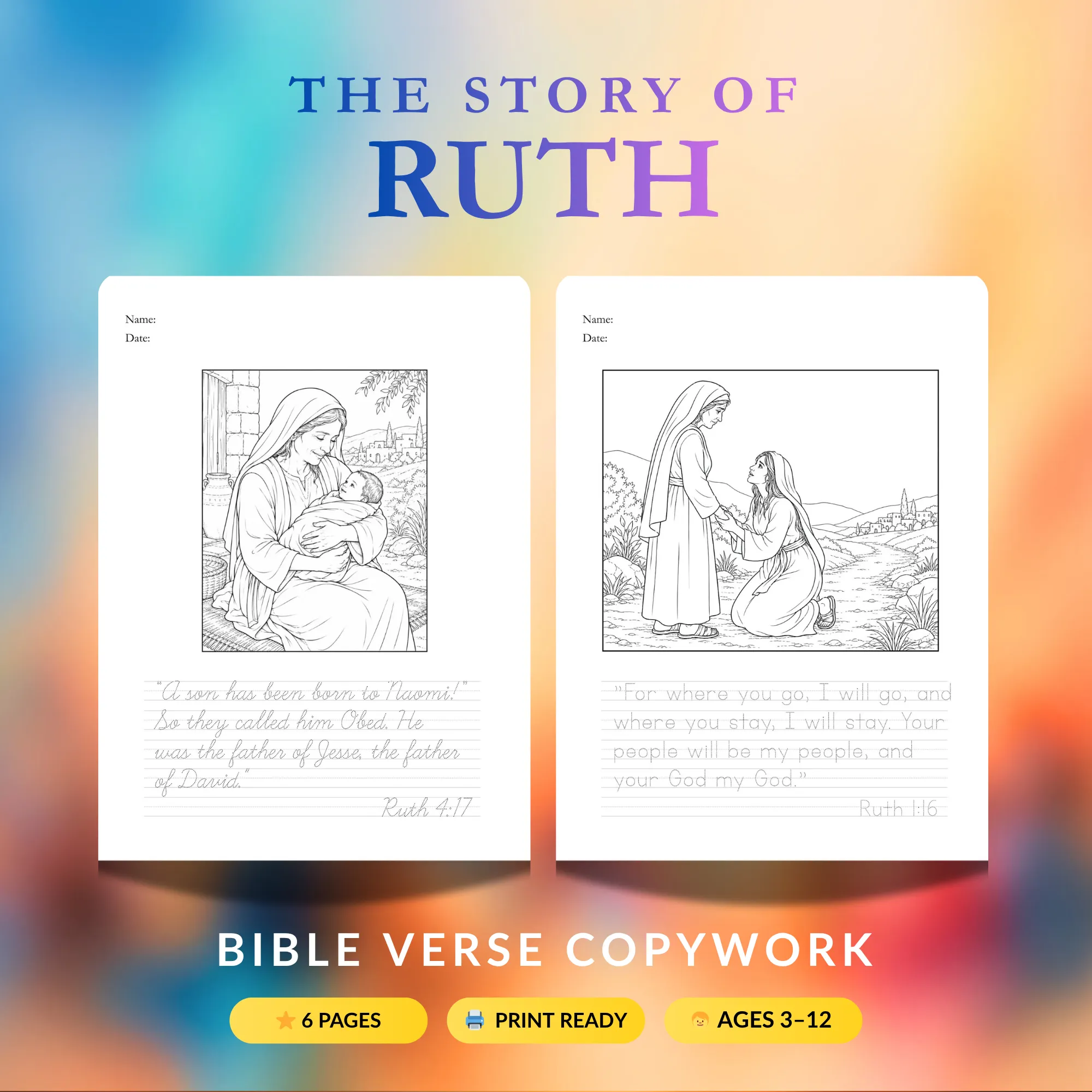 Shavuot
6 scripture copywork pages drawn straight from the book of Ruth — Charlotte Mason-style handwriting practice that doubles as Bible study. Includes the iconic verse: "Your people will be my people, and your God my God." Ages 4–12.
$3.49
View Details →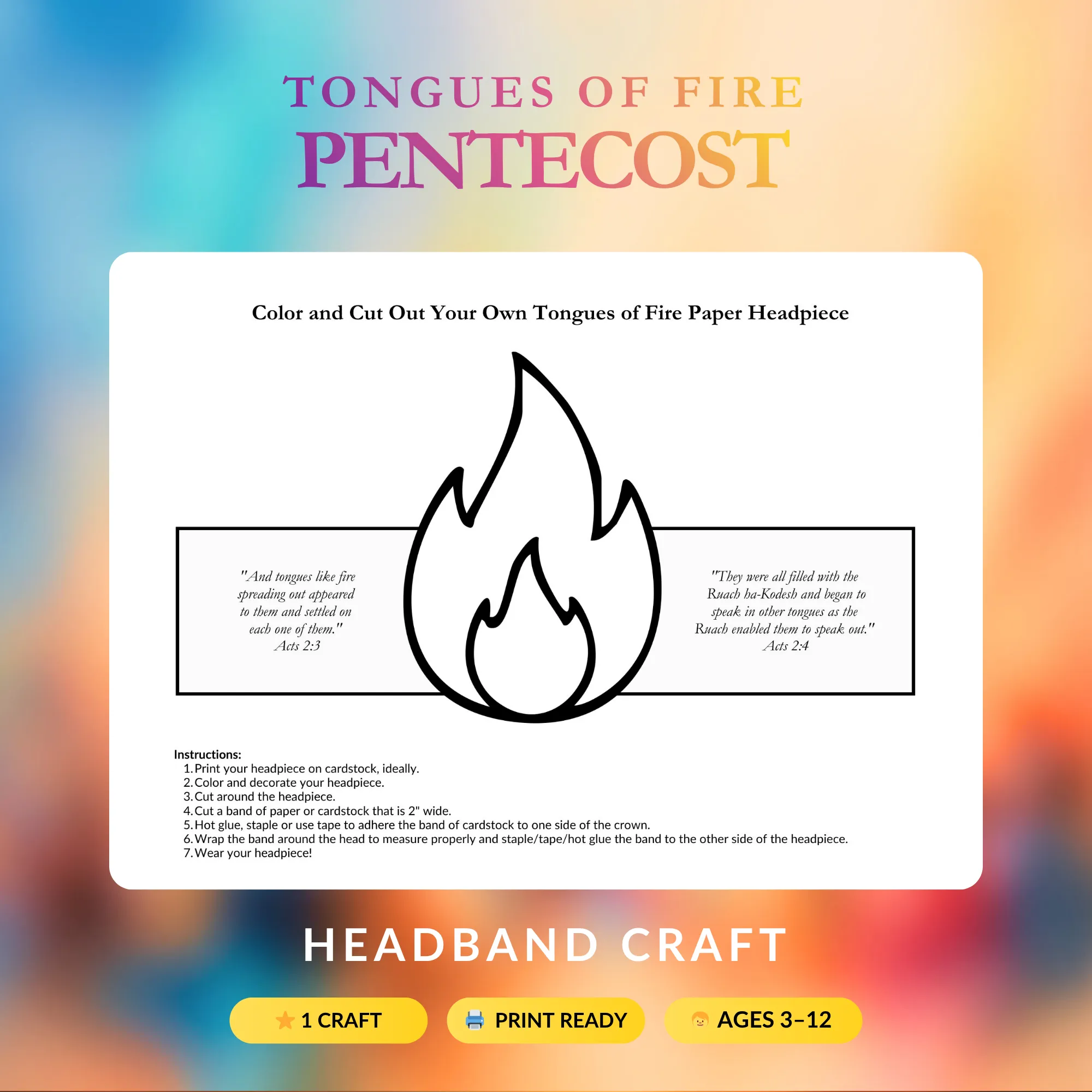 Shavuot
A wearable Pentecost craft for kids — printable tongues of fire headband template inspired by Acts 2. Children color, cut, and wear the moment God poured out His Spirit on the Feast of Weeks. Ages 4–12.
$1.99
View Details →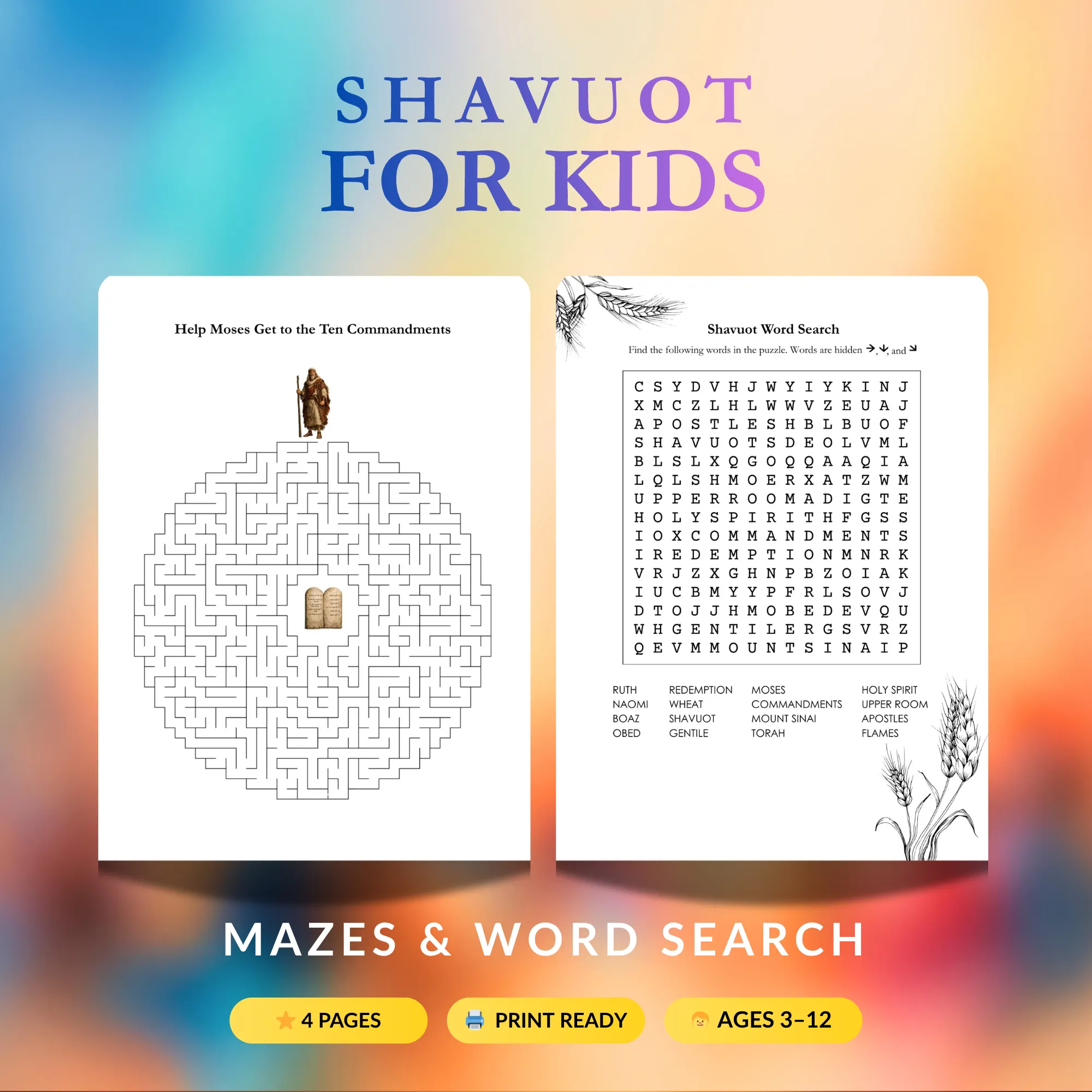 Shavuot
4 printable activity pages — mazes and word searches themed around Mount Sinai, the story of Ruth, and the giving of the Spirit at Pentecost. Quiet-time activities for the Feast of Weeks. Ages 4–12.
$2.49
View Details →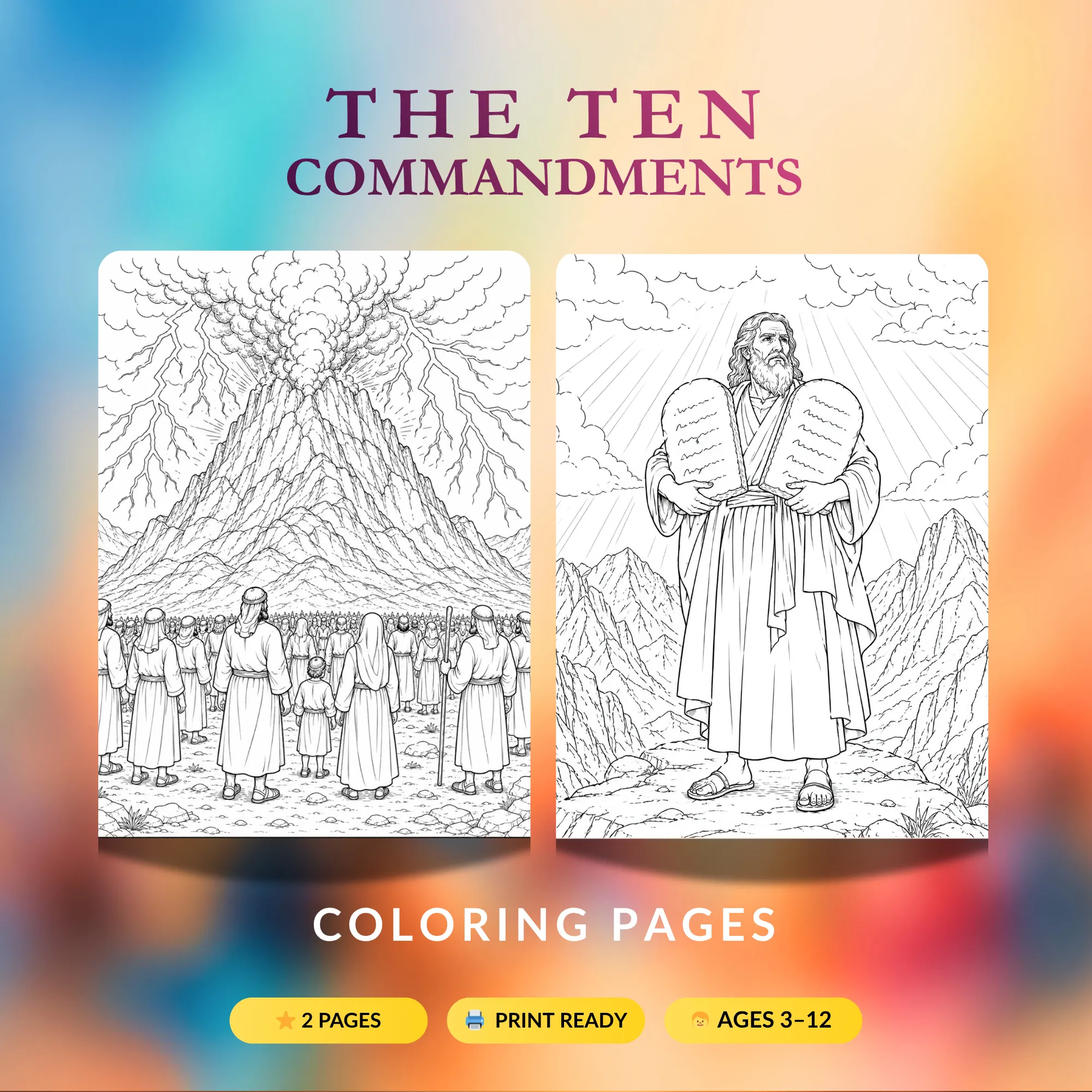 Shavuot
2 beautifully illustrated coloring pages from Mount Sinai — Moses with the Ten Commandments, and the children of Israel gathered at the mountain to receive the words of God. Ages 4–12.
$1.99
View Details →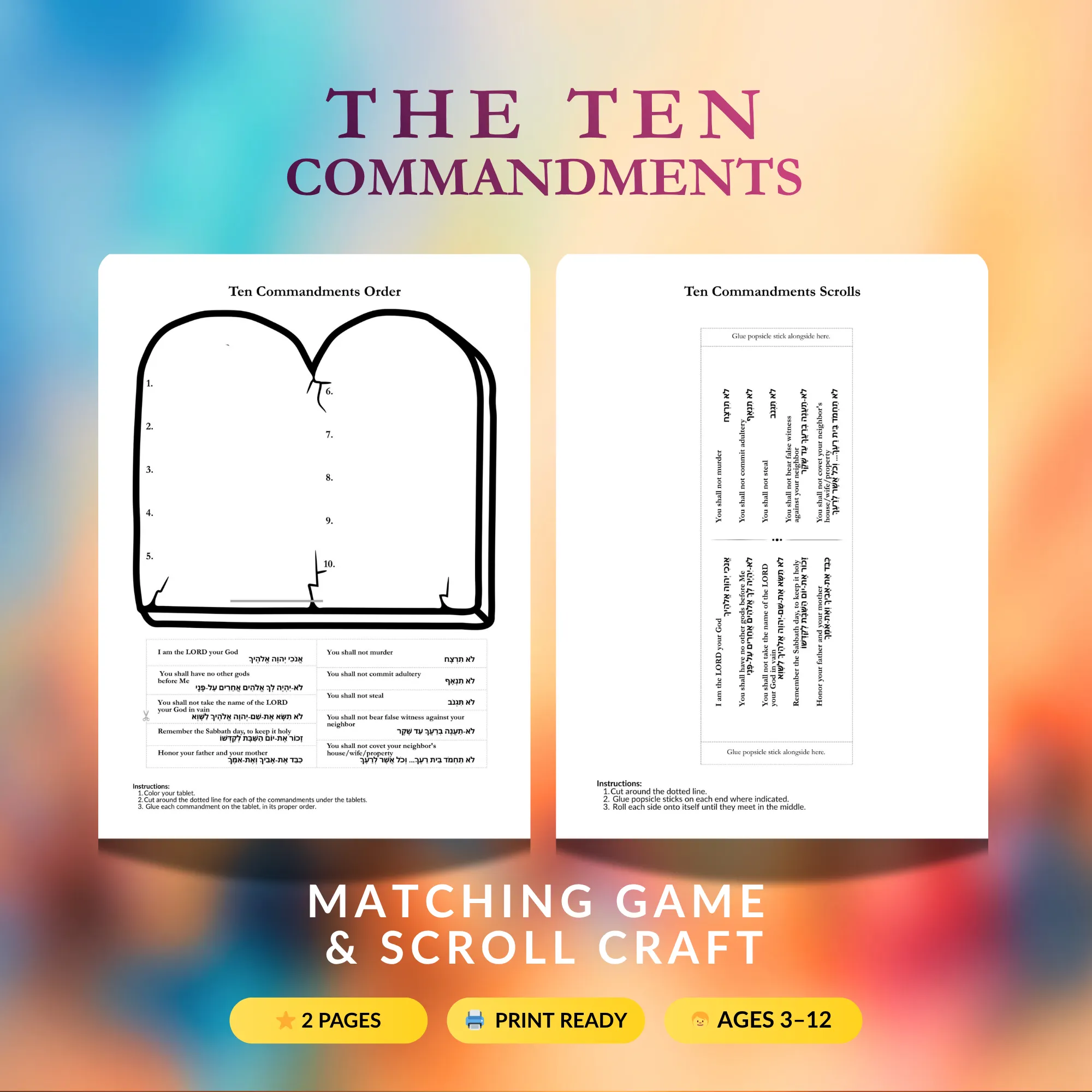 Shavuot
Two hands-on Mount Sinai activities — a Ten Commandments matching game with stone tablet cutouts, plus a printable Torah scroll craft children assemble with popsicle sticks. A Messianic Shavuot favorite. Ages 4–12.
$2.99
View Details →A simple coloring page of Mount Sinai, a small loaf of bread to tear, and the line “God came down on the mountain” repeated all week. Little ones don’t need much — they need it often.
Paper crafts of the two stone tablets, coloring pages of the wheat harvest, and helping in the kitchen to braid the two loaves. Children at this age remember the parts they live.
Read Exodus 19–20 and Acts 2 side by side. Read the book of Ruth straight through. Older children can also help count the Omer aloud each evening for the family.
Read a passage a day in the week leading up to Shavuot. Together they tell the whole story — from Sinai to Pentecost.
From the Journal
Biblical FeastsA practical, step-by-step guide to celebrating a Messianic Shavuot with little ones at home—Sinai, Ruth, and the Spirit poured out on Pentecost.
Read More →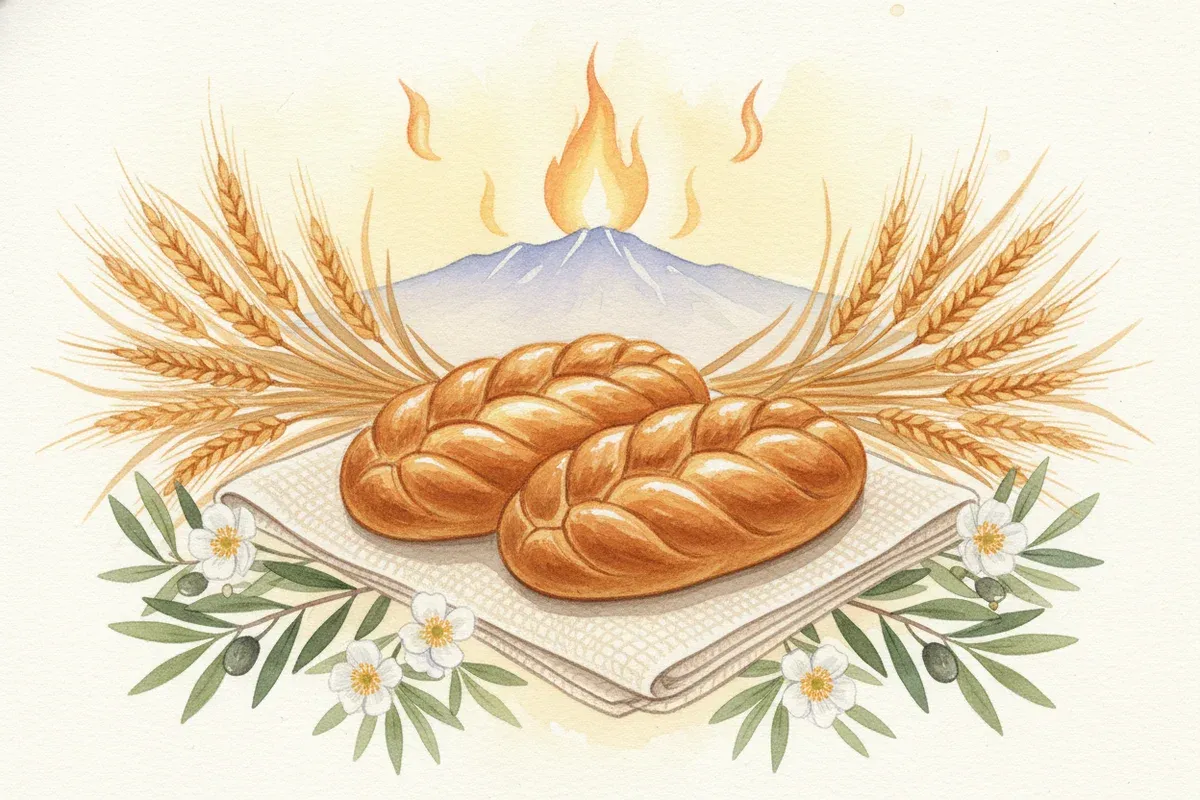 Biblical Feasts
Pentecost and Shavuot are the same feast — Acts 2 happened on the fiftieth day of the biblical calendar. Here's what that means for your homeschool.
Read More →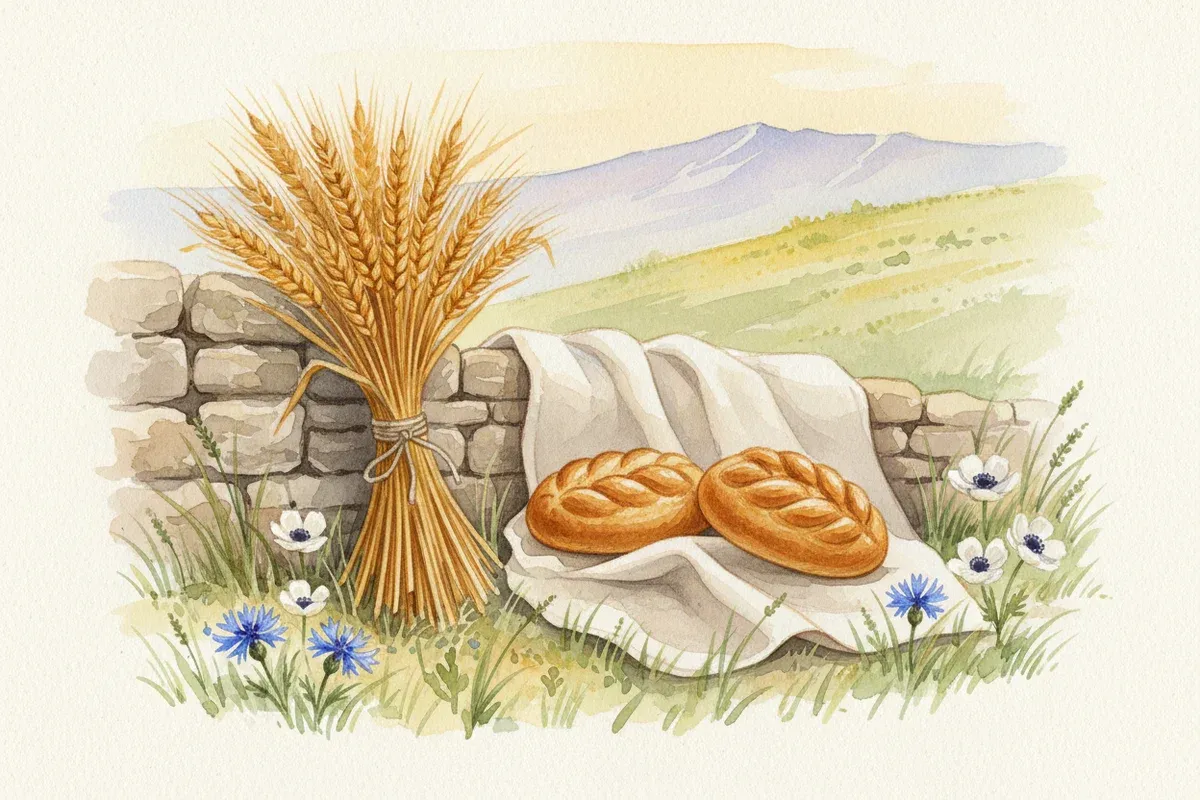 Biblical Feasts
Counting the Omer is the fifty-day walk from Yeshua's resurrection to Shavuot—a quiet rhythm of Scripture, harvest, and the Spirit poured out at Pentecost.
Read More →Shavuot does not stand alone. It grows out of Passover and Firstfruits through the fifty-day Counting of the Omer, and it opens into the rest of the biblical year. Walk back to where the count begins, or forward into the rhythm of the weekly Sabbath that anchors it all.
Explore our full library of Biblical Feasts for Kids, visit our Passover Resources for Kids hub for where Shavuot’s count begins, or start with the weekly Sabbath rhythm that holds it all together.
Shavuot (the Feast of Weeks, also called Pentecost) is the biblical feast that falls fifty days after Firstfruits. It celebrates two great gifts of God to His people: the giving of the Torah at Mount Sinai, and — fifty days after Yeshua's resurrection — the giving of the Spirit at Pentecost. For children, it is a feast of wheat, two loaves of bread, reading the book of Ruth, and remembering the day God descended on the mountain in fire.
Tell it as a story of fire and harvest. Fifty days after Israel left Egypt, God came down on Mount Sinai in fire and gave His people the Torah. Centuries later, fifty days after Yeshua rose from the dead, the disciples were gathered in Jerusalem for that same feast when the Spirit fell — tongues of fire resting on each of them. The Torah once written on stone was now written on hearts. Same feast. Same God. One story.
Read Exodus 19–20 and Acts 2 side by side. Bake two loaves of leavened bread together and eat them at your Shavuot table. Read the book of Ruth aloud. Make a paper craft of the two stone tablets. Color a Mount Sinai page. Decorate your home with greenery to remember Sinai. Stay up late one night to read Scripture together — a beautiful Jewish tradition for the feast.
Shavuot falls fifty days after the Feast of Firstfruits (Yom HaBikkurim) — counted out one day at a time during the Counting of the Omer (Sefirat HaOmer). On the modern calendar it usually falls in late May or early June, depending on the year.
The Hebrew word "Shavuot" simply means "weeks." Leviticus 23 commands Israel to count seven full weeks from Firstfruits — seven weeks of seven days, plus one — arriving at the fiftieth day. The Greek word "Pentecost," used throughout the New Testament, means exactly that: "fiftieth." Same feast, two names.
They are the same feast. Acts 2:1 tells us that when "the day of Pentecost had come," the disciples were all together in one place. That day was Shavuot — the same feast Jewish pilgrims had come to Jerusalem to celebrate for centuries. On that very morning the Spirit fell. The giving of the Torah at Sinai and the giving of the Spirit at Pentecost happened on the same feast — God's design, not a coincidence.
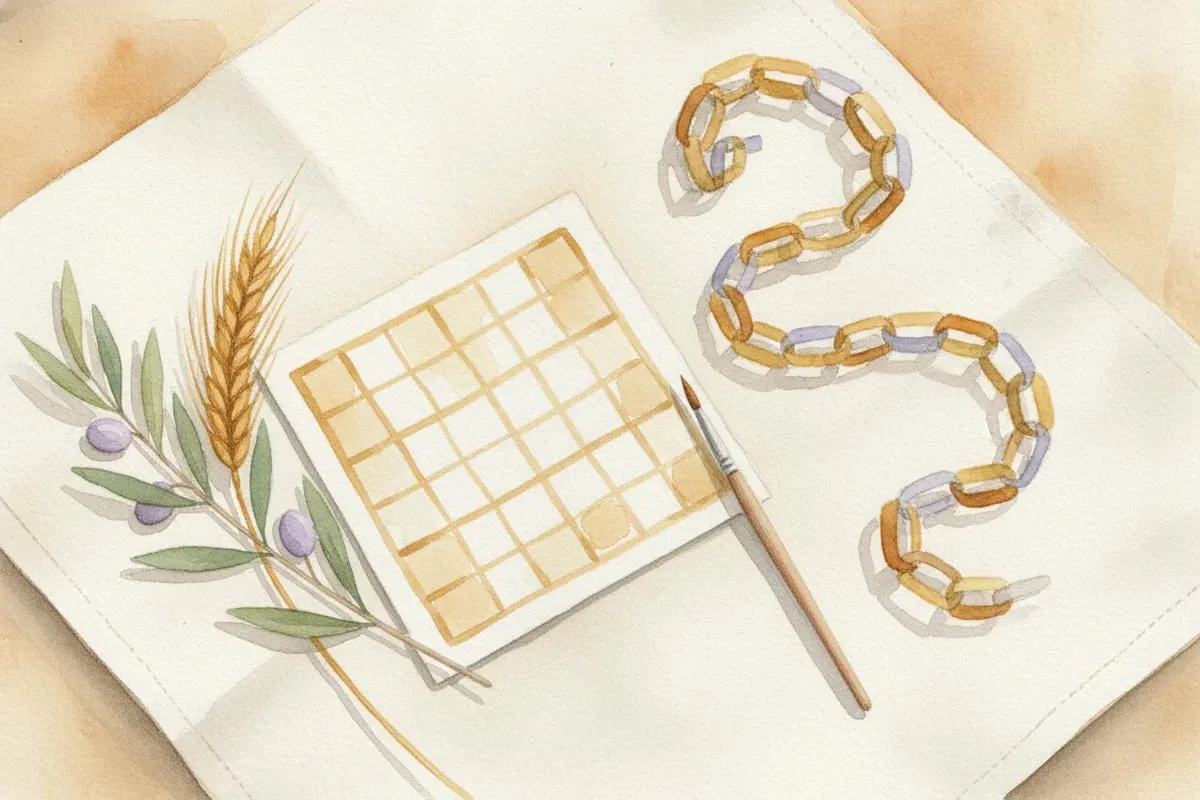
Free Shavuot Resource
Walk the fifty days from Firstfruits to Shavuot with your family. Subscribe and we'll send you our free Counting the Omer Activity — a printable chart, a daily Scripture rhythm, and one small ritual your children mark with their own hands.
Send me the free Counting the Omer Activity
You'll also receive occasional notes from our family on living the biblical calendar with little ones. We never sell or share your information. Unsubscribe anytime.