What Is a Messianic Kids Curriculum?
 By Kristelle13 min read
A homeschool guide for families exploring Torah, the biblical feasts, and the Jewish identity of Yeshua—practical wisdom for every age and stage.
A guide for families exploring a faith rooted in Torah, the biblical feasts, the people of Israel, and the Jewish identity of Yeshua—with practical wisdom for every age and stage.
If you've ever felt a tug in your spirit toward something deeper, toward the feasts God outlined in Scripture, toward the Sabbath rhythm He gave His people, toward a faith that feels anchored in something ancient and alive, you're not alone. And if you've been searching for a way to bring your kids along on that journey, you've probably already discovered that finding the right curriculum isn't easy.
Maybe you've Googled "Messianic homeschool curriculum" or "biblical feasts for kids" and come up short. Maybe you've cobbled together craft boxes, downloaded PDFs, and flipped through books that felt close but not quite right. Maybe you're brand new to all of this and the idea of celebrating Passover (Pesach) with your children sounds beautiful but completely overwhelming.
This post is for you—wherever you are on the journey.
We've been walking this ancient path for nearly a decade as a family of seven, stumbling through, learning as we go, and watching seeds we didn't think were taking root bloom in the most unexpected moments. What follows is everything we wish someone had told us when we started.
So What Exactly Is a Messianic Kids Curriculum?
A Messianic kids curriculum is educational material designed to teach children about their faith through the lens of Scripture's Messianic Jewish context. It centers on the Torah, the biblical feasts, and the life and teaching of Yeshua (Jesus)—not as separate threads, but as one continuous story.
But here's where it gets important: not everything labeled "Messianic" or "Hebrew Roots" is the same thing.
There's a lot of diversity within the Messianic Jewish space, and people are coming to this understanding from many different backgrounds. That's worth honoring. We're all at different places on this journey, and maintaining a spirit of unity matters deeply.
That said, there is a meaningful theological distinction that shapes the kind of curriculum you choose for your family, and it's worth understanding.
Messianic Jewish Faith vs. Hebrew Roots—A Distinction That Matters
Messianic Jewish belief holds three things in tension that make it unique:
God's covenant with the Jewish people is eternal. He has not abandoned Israel. The Jewish people remain central to His redemptive plan—not as a footnote, but as the root into which Gentile believers have been grafted.
The Torah is good and still stands today. It's not a relic of the "Old Testament." It's living instruction—God's wisdom for His people, given in love.
Israel has a place of eternal significance. The land, the people, and the promises are not metaphors. They are real and ongoing.
Hebrew Roots movements often share a high regard for Torah and biblical practice, and there's much to appreciate there. But sometimes—intentionally or not—the Jewish identity behind these practices gets obscured. When that happens, it can result in a subtle form of replacement theology: adopting the practices while disconnecting them from the people and covenant they belong to.
This distinction matters for your kids' curriculum because it shapes how your children understand their place in God's story. Are they learning to honor and join with the Jewish people in covenant faithfulness? Or are they unknowingly absorbing a framework that erases Jewish identity from the very traditions they're celebrating?
The best Messianic kids curriculum holds this tension with care—teaching your children the beauty of Torah, the richness of the feasts, and the Jewish identity of Yeshua, all while honoring the ongoing validity of God's covenant with Israel.
Why Most Families Start Looking (and What They Find)
Most families arrive at this search for one of two reasons.
Some are already part of a Messianic Jewish community—often coming from Christian backgrounds—and they're trying to figure out how to integrate Messianic Jewish faith into their daily teaching. They believe it, they're living it, but the homeschool or family worship resources aren't keeping up.
Others are Christian families who've started to feel the pull toward the feasts, toward Sabbath, toward the Jewish roots of their faith. They're curious and hungry, but they don't know where to start—especially with kids.
Either way, the search usually leads to a similar experience: a patchwork of options that each deliver part of the picture but never the whole thing.
Resources Worth Exploring (And What We've Loved About Each)
We've had the privilege of using a range of Messianic kids resources over the years, and each one has brought something meaningful to our family's journey. The fact that these creators exist and are pouring into this space is something to celebrate.
The Peaceful Press incorporates the biblical feasts into a Charlotte Mason-inspired rhythm, and it's beautifully done. For families wanting a gentle, nature-based approach with feast integration, it's a wonderful starting point.
Kindle Togetherness offers thoughtful, well-crafted individual resources that have been a real blessing in our home. Her heart for families shines through in everything she creates.
Links to Messiah provides hands-on craft boxes tied to the biblical feasts that our younger kids have absolutely loved. There's something special about learning through touch + hands-on creativity, and these boxes deliver that experience beautifully.
Celebrations of the Bible - A Messianic Children's Curriculum from Messianic Jewish publishers is a helpful introduction to the appointed times from a Jewish perspective. If you're just getting started and want a foundation to build on, it's a solid resource to have on your shelf.
Lessons in Yeshua's Torah walks through the entire Torah cycle, complete with coloring pages, which is a wonderful framework for families who want to follow the rhythm of weekly Torah portions with their children.
We're grateful for every one of these creators. They're pioneering in a space where not much existed a decade ago, and families are better for it.
What We're Building On Top of That Foundation
As we used these resources and grew in our own understanding, we began to see an opportunity to contribute to what this community is building together. Three things became central to our vision:
Theological depth without theological drift. We wanted resources that go beyond surface-level celebration and into the covenant realities behind each feast—always honoring the Jewish people and the ongoing validity of God's promises to Israel alongside faith in Yeshua.
Beauty and craftsmanship. This might sound secondary, but it's not. Charlotte Mason understood that beauty shapes the soul. When your curriculum materials feel hastily designed or visually uninspired, it communicates something to your children about how seriously we take these sacred rhythms. Families in this space deserve resources that are as beautiful as the traditions they represent.
A full-year rhythm. The biblical calendar isn't a collection of isolated holidays—it's a comprehensive cycle that carries families from Shabbat to Passover to Shavuot to the fall feasts and back again. We wanted to create resources that honor that rhythm as a whole.
What the Right Curriculum Actually Does for Your Family
When you find (or build) the right Messianic kids curriculum, something shifts. It stops being another item on your homeschool checklist and becomes the heartbeat of your family's week and year.
Here's what that looks like practically.
Shabbat Becomes the Anchor
Leviticus 23 outlines the seven appointed times—the moedim—given to the Jewish people. And the very first one listed is the Sabbath. It's weekly. It's accessible. And it changes everything.
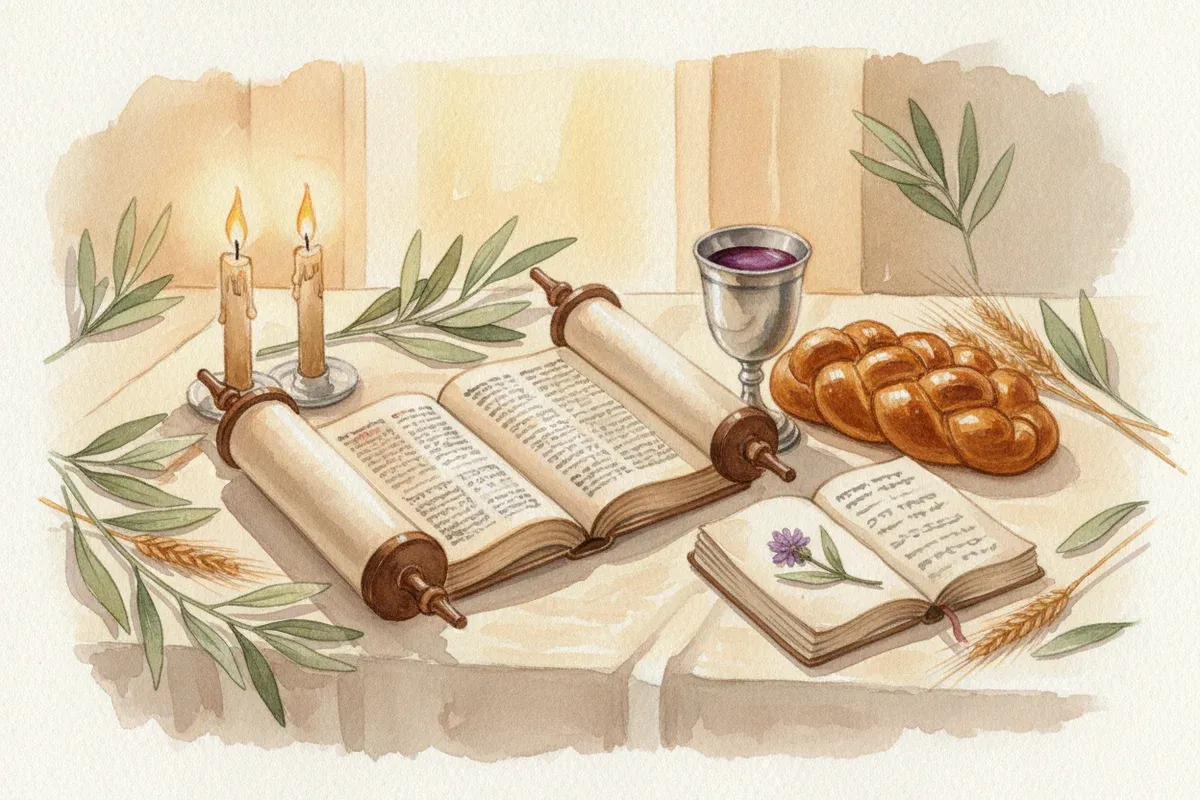
In our family of seven, Shabbat (the Sabbath) is the rhythm the whole week revolves around. Our little kids—even the youngest—wait with excitement for Friday night dinner. It's become the hallmark of every week, full of anticipation, candle lighting, prayer, and presence.
On Saturday, we spend time with extended family, centering our conversations around the weekly Torah portions and including the children in teaching moments as they naturally arise. For five years, we did this in our home as a small, tight-knit group of family following Yeshua together before eventually becoming involved in a local Messianic synagogue.
This Sabbath rhythm is the foundation. And once it's in place, everything else flows from it. If you're new to building a weekly cadence, our post on creating a Sabbath rhythm for your family is a gentle place to begin. And if you'd like a starting point you can hold in your hands, our free Sabbath Family Starter Guide walks through candles, blessings, and a simple Friday-night rhythm—delivered straight to your inbox.
The Feasts Become the Seasons of Your Year
The weekly rhythm of Shabbat effortlessly extends into the annual rhythm of celebrating the biblical feasts:
Passover and the Feast of Unleavened Bread (Matzot)—We retell the Exodus story, share the seder meal, and prepare our home by searching for and removing all leaven. (More on that in a moment—it's one of our favorite family stories.)
Counting the Omer—The 49-day count between Passover and Shavuot becomes a daily family practice of anticipation and spiritual preparation. We walk through it slowly in our post on Counting the Omer and the Feast of Shavuot.
Shavuot (the Feast of Weeks / Pentecost)—We celebrate the giving of the Torah at Sinai and read the book of Ruth together, celebrating this Moabite woman who aligned herself with the God of Israel—a beautiful picture for Gentile believers who've been grafted in. We also celebrate the giving of the Spirit at Pentecost, remembering that the early Jewish believers in Yeshua were gathered to observe this very feast when the Spirit fell.
Rosh Hashanah (Yom Teruah, the Feast of Trumpets)—The King is in the field. We blow the shofar (ram's horn) and begin the season of turning our hearts toward repentance.
Yom Kippur (the Day of Atonement)—We fast as each family member is able and spend the day in study and reflection, preparing our hearts with gratitude for the atonement Yeshua has provided.
Sukkot (the Feast of Tabernacles)—The joyful feast. We build a sukkah (a temporary, three-sided shelter) in our backyard and often camp out, either there or by a lake, remembering the God who has always taken care of His people.
Hanukkah (the Festival of Lights) and Purim (the celebration of Esther)—More recently, we've added these celebrations to the rhythm, enjoying the fullness of tradition that God has given His people throughout history.
This is the curriculum. Not a textbook—a life.
When the Seeds Bear Fruit—Two Stories from Our Family
The hardest part of teaching children anything rooted in faith is the long silence between planting and harvest. You repeat the prayers. You set the table. You tell the stories. And for months—sometimes years—you wonder if any of it is landing.
The Shema moment. When our children were younger, we had begun saying the Shema (the daily declaration from Deuteronomy 6: "Hear, O Israel, the Lord our God, the Lord is one") every Shabbat. We repeated it week after week, often to a soundtrack of restless wiggles and wandering eyes. It was easy to think none of it was sticking.
Then one Monday, completely out of the blue, our five-year-old began singing the Shema in Hebrew. By herself. Unprompted.
It was one of those moments where you realize that all the time you've been investing—even when it seemed like it wasn't working—had been growing roots beneath the surface.
The Passover search. As our children got older, we began teaching them about the tradition of bedikat chametz—searching the home before Passover to remove every trace of leaven. Leaven represents sin—the things that puff up our ego and lead to pride. We taught these ideas year after year during the spring season.
Three years in, something shifted. It was actually our older children who led the charge. They wanted to make sure we threw away every piece of leftover bread, every sourdough starter. They meticulously searched the fridge, freezer, pantry, and cabinets to ensure not a speck of leaven remained.
When we asked them why they thought this was important, they said: "God wants us to be intentional about removing sin from our lives, and we get to remember that during Passover."
Seeds planted. Fruit borne. That's what the right curriculum does—it gives your children a framework to encounter God's truth in a way that takes root in their hearts.
How to Get Started (Even If You Have No Idea What You're Doing)
If you're reading this and feeling a mix of excitement and overwhelm, we understand completely. We've been there.
When we first started, we had no clue where to begin. We weren't raised in a Jewish context. We didn't have Jewish friends. All of these rhythms—Shabbat, the feasts, the prayers, the Hebrew—were incredibly foreign.
But we will never forget the first time we celebrated the Sabbath as a family. The presence of God was so tangible that we were quite literally in tears. That one evening set us on a nearly decade-long journey of learning to follow Yeshua in a Jewish way.
Here's what we wish someone had told us at the beginning.
1. Start with Shabbat
You don't need to learn all seven feasts at once. Start with the weekly rhythm. Light candles on Friday evening. Share a meal together. Rest on Saturday. Let it be imperfect. Let it be yours.
Over time, the weekly rhythm will naturally open the door to the seasonal feasts. Passover will feel like the next step, not a giant leap.
2. Give Yourself an Enormous Amount of Grace
None of this is done out of obligation. There is a tremendous amount of grace as you follow the Spirit's leading into a more rooted form of faith and practice, tethered to centuries of Jewish tradition.
You don't have to get it all right. You don't have to worry about the minutiae of every prayer and every element of observance. You just need an intentional heart full of love for the Father, a willingness to learn, an acceptance that you'll stumble here and there, and openness to the voice of God and the leading of His Spirit.
3. Find Resources That Match Your Values
Look for curriculum and materials that hold the theological guardrails we discussed earlier—honoring Jewish identity, teaching Torah as living instruction, and presenting the feasts as covenant realities rather than cultural accessories. See if there's a Messianic Jewish synagogue that you can visit or a local community you can connect with and learn from.
Look for beauty. Your children deserve resources that reflect the beauty of what they're learning.
And look for rhythm. The best resources aren't one-off downloads for a single holiday. They're companions for the entire year, carrying your family through the full cycle of God's appointed times.
This is exactly what we're building at Revayah Paper Co—Messianic Jewish educational resources for kids ages 4–12 that are theologically grounded, beautifully designed, and structured around the biblical calendar. From Shabbat to Sukkot, we're creating the curriculum we wish we'd had when we started. Our biblical feasts hub is the easiest place to see how the pieces fit together, and our shop collects every printable we've released so far.
4. Don't Forget to Have Fun
These rhythms are beautiful. They're amazing. They're wonderful opportunities to draw your family together. They're moments to celebrate the richness of tradition that God has given His people—and to celebrate joyfully with the family we've been grafted into.
Build the sukkah. Hide the afikomen. Let the kids blow the shofar (even badly). Dance on Simchat Torah. Let joy lead.
Is a Messianic Kids Curriculum Right for Your Family?
If you've read this far, you probably already know the answer.
A Messianic kids curriculum is right for your family if you want your children to understand their faith in its original Jewish context. If you want them to know that the God of Abraham, Isaac, and Jacob has never abandoned His covenant. If you want the rhythm of your year to be shaped not by consumer holidays but by the appointed times God Himself established.
It's right for your family if you believe that beauty matters in education, that theological depth matters even for young children, and that the best learning happens not in a classroom but around a dinner table on Friday night with candles flickering and bread broken and prayers spoken by small voices that are just beginning to understand how big this story really is.
You don't have to have it all figured out. None of us do.
You just have to start.