You don’t need to be a scholar to teach children the Day of Atonement. You need a story about two goats, the book of Jonah, and a quiet table. Add hand-illustrated Messianic printables and a simple five-step rhythm for the holiest day on God’s calendar, at home or in the classroom.
Yom Kippur, the Day of Atonement, falls on the tenth day of the seventh Hebrew month, Tishrei. It arrives ten days after the Feast of Trumpets, at the close of the Ten Days of Awe. Scripture gives the command plainly: “However, the tenth day of this seventh month is Yom Kippur, a holy convocation to you, so you are to afflict yourselves.” (Leviticus 23:27).
The name means “Day of Atonement,” and the Hebrew root behind kippur carries the idea of covering. Scripture calls it a Shabbat of solemn rest, Shabbat Shabbaton, a Sabbath of Sabbaths. No work of any kind is done, and the command to afflict your souls is what Jewish tradition has long kept as a fast of roughly twenty-five hours, from evening to evening. It was the one day in the year when the Kohen Gadol (the high priest) stepped through the veil into the Holy of Holies to make atonement for the whole nation.
For those of us who follow Yeshua, the day carries one more layer. Hebrews 9 tells us that Messiah entered the Holies once for all, not by the blood of goats and calves but by His own blood. The work is finished. And still this day teaches us something we need: to stop, to tell the truth about our sin, and to rest in a forgiveness we could never have earned. “For on this day atonement will be made for you, to cleanse you. From all your sins you will be clean before Adonai.” (Leviticus 16:30).
Why This Day Matters for Children
This is the quietest day on God’s calendar, and it comes right after the loudest one. Ten days ago the shofar was blasting. Now the house goes still. Children feel that contrast long before they can explain it, and feeling it is where the understanding starts.
Children do not fast. In Jewish tradition, children under bar or bat mitzvah age are not expected to fast at all, and little ones should eat normally. If an older child wants to take part in some small way, let them give up a treat or a screen for the day.
Four simple themes run through the day, and they are the four things you are teaching:
We stop. No work, no errands, no rushing. The shape of the day itself says that being forgiven is not something we produce.
We tell the truth. Confession is simply saying out loud what is already true, to a Father who is not surprised by any of it.
We are made clean. Forgiveness is God’s gift and never a wage. He does the washing.
We make it right with others. Repentance walks out the door with us and shows up as kindness toward the people we have hurt.
The Backdrop: The Story of the Two Goats
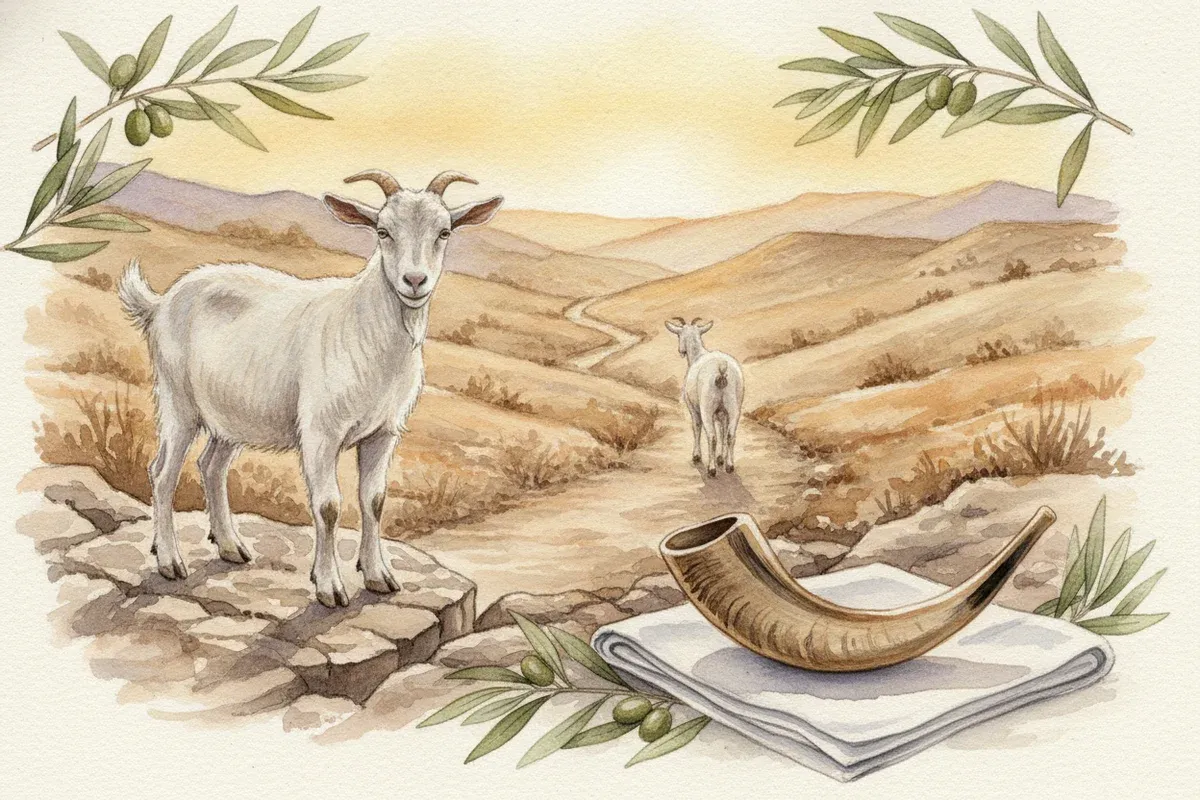
Before you teach anything else about this day, tell the children what happened in the tabernacle. Leviticus 16 reads like a picture book. Once a year the Kohen Gadol took off his golden garments and dressed in plain white linen, the clothes of a servant. Two goats were brought to the door of the tent, so alike that nobody could tell them apart. Lots were cast. One goat was for Adonai and was offered as a sacrifice. The other became the scapegoat.
“Aaron shall lay both his hands on the head of the live goat and confess over it all the iniquities of Bnei-Yisrael and all their transgressions, all their sins. He should place them on the head of the goat and send it away into the wilderness by the hand of a man who is in readiness. The goat will carry all their iniquities by itself into a solitary land and he is to leave the goat in the wilderness.” (Leviticus 16:21–22).
Children grasp that picture immediately. The sin is placed on the goat, and the goat walks away, out past the last tent, until nobody can see it anymore. Then read them the psalm that says the same thing without a goat: “As far as the east is from the west, so far has He removed our transgressions from us.” (Psalm 103:12).
One Hebrew word to teach here: Kippur (kee-POOR), atonement, from a root that means to cover. And remind them of the word they met in Elul and at the Feast of Trumpets: Teshuvah (teh-SHOO-vah), “to return.” Teshuvah is turning around and walking back. Kippur is what God does when we arrive.
Then let them act it out. Give each child a strip of paper and have them write or draw one thing they are sorry for. Tape the papers to a stuffed animal or to a goat cut from paper. Carry it together out of the room, or all the way to the far end of the yard, and come back without it. Show them the empty hands and ask what is missing.
Then comes the turn that makes the whole day sing. The goats could only picture what was coming. “We all like sheep have gone astray. Each of us turned to his own way. So Adonai has laid on Him the iniquity of us all.” (Isaiah 53:6). Yeshua carried what the two goats could only carry in shadow, and He did not have to be sent away from us to do it.
Tell this story first. Everything else you do on Yom Kippur is an answer to the question the story raises in a child: where did my sin go?
How to Teach Yom Kippur to Kids
This day holds more story than most people expect: a high priest in white linen, two goats, a runaway prophet, and a whole city that turned around. Here is the rhythm, five simple steps, for the dinner table or the reading circle.
1. Read the command and tell the story of the two goats
Read Leviticus 23:26–32 aloud. It is short enough for a child to hear the whole command in under a minute: gather, rest, humble your souls. Then retell Leviticus 16 in your own words, the way you would tell any good story, with the white linen and the two identical goats and the long walk into the wilderness.
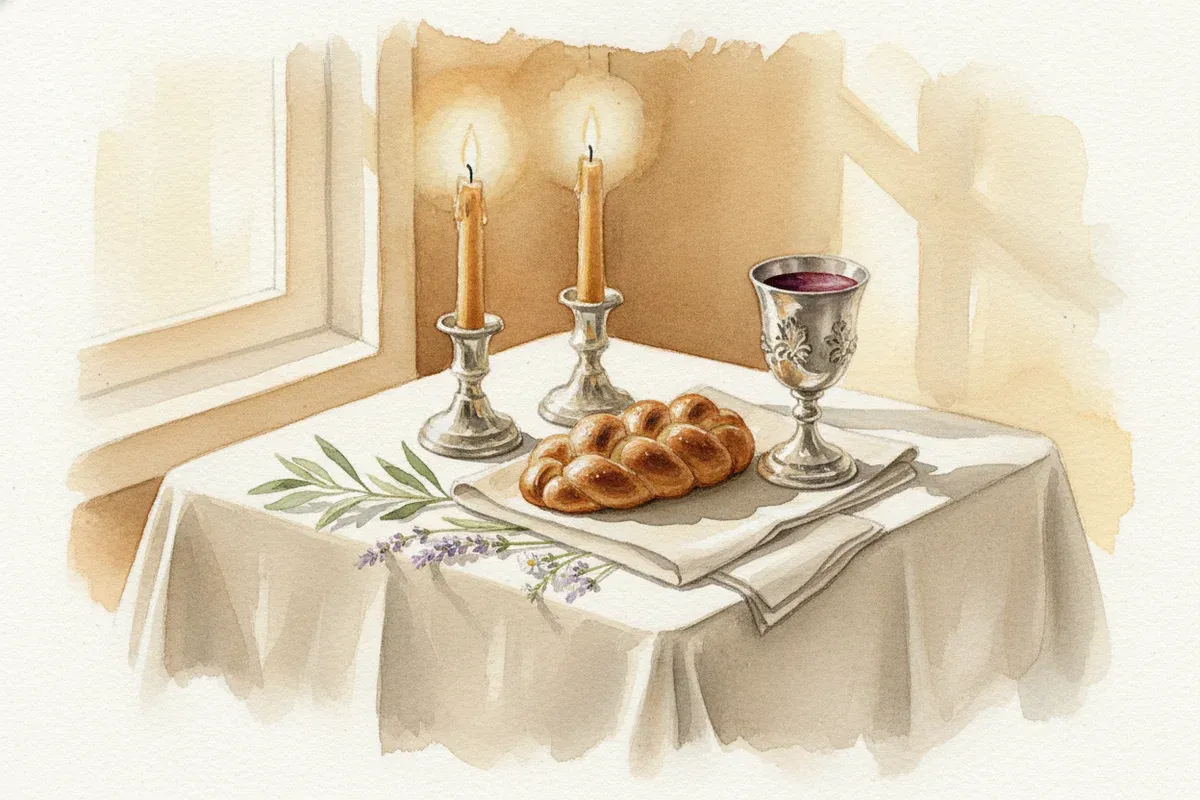
Because the day is a Shabbat, light the candles before sunset, as the fast begins. Many families and congregations wear white, a picture taken straight from the prophet: “Come now, let us reason together,” says Adonai. “Though your sins be like scarlet, they will be as white as snow. Though they be red like crimson, they will become like wool.” (Isaiah 1:18). Let the children wear something white too, and tell them why. If your congregation holds a Kol Nidre service as the day begins, that is a good place for older children to sit and listen.
2. Color and craft the story
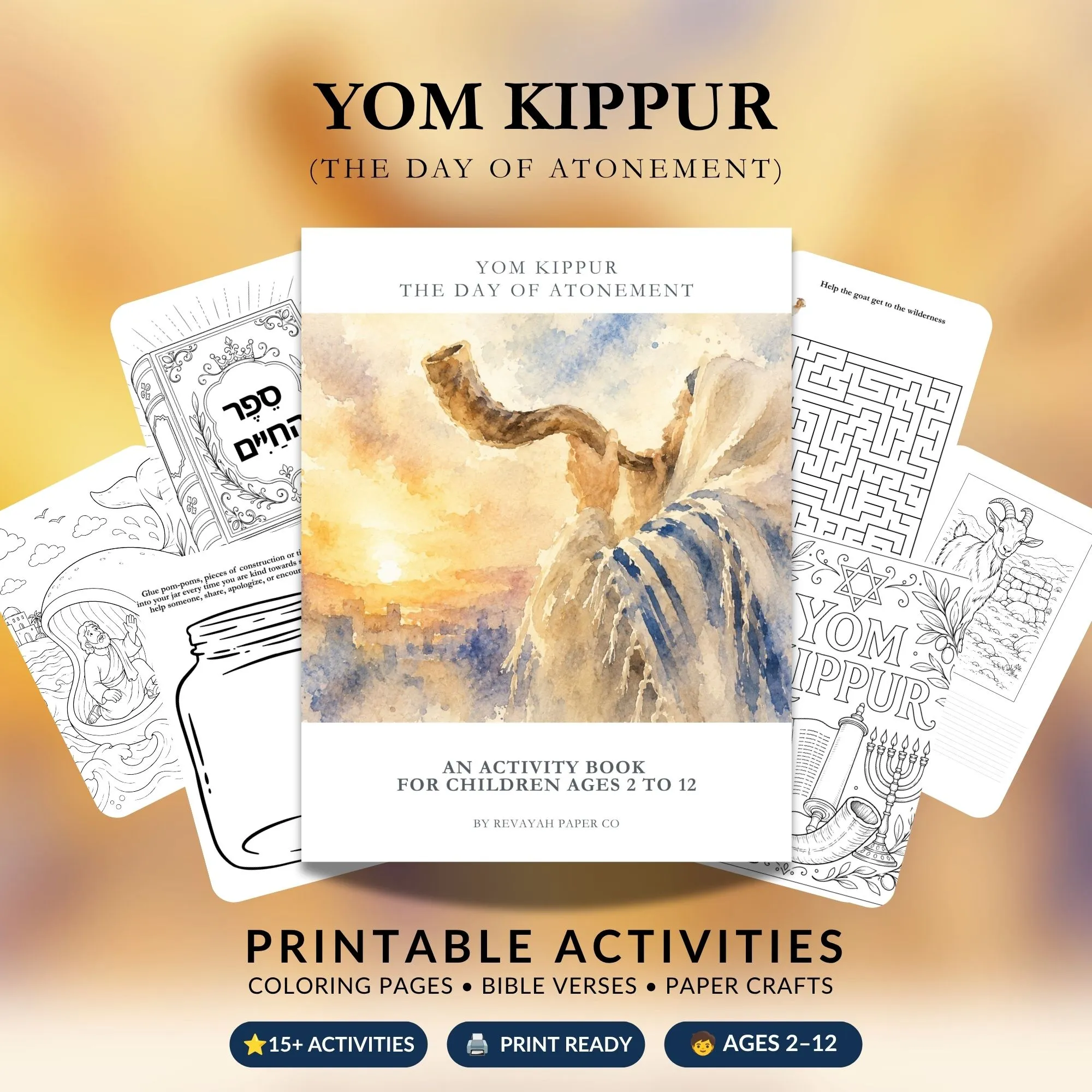
Bring out our Yom Kippur activity bundle and let their hands work while the story settles. There is a two goats coloring page from Leviticus 16, a scapegoat maze that asks them to help the goat get to the wilderness, a mirror drawing where they complete the other half of a goat’s face, a Book of Life coloring page with the Hebrew title Sefer HaChaim, and Leviticus 16:30 copywork at three levels so every child in the room can write the same verse. Hands busy, ears open.
3. Read the book of Jonah aloud
In synagogues around the world, the whole book of Jonah is read on Yom Kippur afternoon. Four short chapters, about ten minutes, and it is the best story in Scripture for this day. A prophet who ran the wrong way. A city that had every reason to be judged. And a God whom Jonah describes like this: “I knew that you are a gracious and compassionate God, slow to anger and full of kindness, and relenting over calamity.” (Jonah 4:2).
Ask one question when you close the book: who turned back in this story? Let the children find all of the answers. The sailors turned. Jonah turned, inside the fish. Nineveh turned, from the king down to the animals in sackcloth. The only one still sulking at the end is the prophet.
The bundle has a Jonah coloring page of the great fish, a circular maze that helps Jonah get to the shore, and a drawing prompt for Jonah in his boat.
4. Write down what you want to leave behind
The bundle’s teshuvah journal page asks one question: can you think of things you can ask forgiveness for? Older children write. Younger children draw. Give them quiet, and do not read over a shoulder unless the page is offered to you.
Then pray it together: “If we confess our sins, He is faithful and righteous to forgive our sins and purify us from all unrighteousness.” (1 John 1:9). And then, this is the part we forget, tell them it is forgiven. Say it out loud, plainly, the way you would tell them dinner is ready. Children will carry guilt around for days if nobody tells them they can set it down. If you want one more prayer, David’s fits the day: “Create in me a clean heart, O God, and renew a steadfast spirit within me.” (Psalm 51:12, which is 51:10 in some Bibles).
5. Put repentance into practice
The haftarah read on Yom Kippur morning describes the fast God actually asks for: “Is not this the fast I choose: to release the bonds of wickedness, to untie the cords of the yoke, to let the oppressed go free, and to tear off every yoke? Is it not to share your bread with the hungry, to bring the homeless poor into your house? When you see the naked, to cover him, and not hide yourself from your own flesh and blood?” (Isaiah 58:6–7). Repentance that never leaves the heart has not quite happened yet.
So give the children something to do with their hands. Set out the kindness jar page and drop in a pom-pom for every kind act. Have them make a card for someone they need to say sorry to, and then deliver it. Set aside tzedakah (giving to those in need) together as a family. The traditional trio for this day is teshuvah, tefillah, and tzedakah: repentance, prayer, and giving. All three are hiding in the bundle’s word search.
When the sun goes down and the final shofar blast of Ne’ilah closes the day, break the fast together with a simple, happy meal. Five days later comes Sukkot, the Feast of Tabernacles and the season of joy. The calendar itself is telling the children how the story ends.
Printable Day of Atonement Resources
Yom Kippur Activities and Printables for Kids
Hand-illustrated by our family. Print at home, print at your congregation, use them year after year.
Looking for more of the appointed times? Browse all of our printables in the shop to walk through the whole year of biblical feasts together. If you are teaching the fall season from the beginning, our Rosh Hashanah activity bundle opens it with the sound of the shofar.
A Seven-Day Reading Plan for the Day of Atonement
Read one passage a day in the week leading up to the Day of Atonement, or one per class session. Together they walk the whole day, from the command in the Torah to its answer in Messiah.
Leviticus 23:26–32 The command itself: a holy convocation, no work, and a call to humble your souls. Read it slowly and let the children notice how much of this day is about stopping.
Leviticus 16:1–22 The white linen, the two goats, and the long walk into the wilderness. Retell it in your own words first, then read it aloud.
Isaiah 57:14–58:14 The traditional morning haftarah. If that runs long for your children, read Isaiah 58:1–12 on its own. The fast God chooses looks like bread shared and burdens lifted.
Jonah 1–2 A prophet running from God, a storm, sailors who start to pray, and a great fish. Ask the children why they think Jonah ran.
Jonah 3–4 A city that turned around, and a prophet who could not bring himself to celebrate it. Read to the very last verse. God gets the final word, and it is a question about mercy.
Psalm 51 or Psalm 103 David asking for a clean heart, or the psalm that carries our sins as far as the east is from the west. Pick the one that fits the child in front of you.
Hebrews 9:11–14 and 10:19–22 Messiah as our Kohen Gadol, entering the Holies once for all. The room the high priest could visit one day a year is now a room we are invited to enter with confidence.
The Traditional Synagogue Readings
Yom Kippur is kept as one long day, with services from evening through nightfall the following day. It is Jewish tradition to read a set portion of Scripture in the synagogue in the morning and again in the afternoon. If your family wants to read along with Jewish communities around the world, here is the traditional plan.
Morning
Torah: Leviticus 16:1–34, the whole account of the Day of Atonement service, along with Numbers 29:7–11, the command for the day.
Haftarah: Isaiah 57:14–58:14
B’rit Hadashah: Hebrews 9:1–14
Afternoon (Minchah)
Torah: Leviticus 18:1–30
Haftarah: The whole book of Jonah, together with Micah 7:18–20.
B’rit Hadashah: James 3:13–4:10
These readings come from the traditional festival cycle. You can find them, along with prayers and more resources for keeping the day, at the Shalom app’s Yom Kippur guide.
The Hebrew month of Elul is a 30-day season of repentance before the fall feasts and high holy days. Simple, hands-on ways to teach your children teshuvah—turning back to God.
Yom Kippur is the hinge of the fall appointed times. The season opens with the shofar’s wake-up call at Rosh Hashanah Resources for Kids, which begins the Ten Days of Awe. Those ten days of searching and returning lead here, to the Day of Atonement, the holiest day of the year. Then, five days later, the fasting gives way to Sukkot, the Feast of Tabernacles, and a whole week of living in booths and rejoicing. Solemn, then glad, in that order.
Questions are not interruptions to the lesson. They are the lesson. Here are answers you can give in your own words, at home or in the classroom.
What is Yom Kippur?
Yom Kippur is the Day of Atonement, the tenth day of the seventh Hebrew month and the most solemn day on God's calendar. Leviticus 23 commands a holy gathering, a complete rest from work, and a humbling of our souls. It was the one day each year when the high priest went into the Holy of Holies to make atonement for the whole nation.
What does "atonement" mean?
Atonement means being made right with God again. The Hebrew word is kippur, from a root that carries the idea of covering. Picture something broken between you and God, and then picture God Himself covering it over so the friendship is whole again. Leviticus 16:30 promises that on this day you will be clean before Adonai.
Why were there two goats?
Two goats that looked alike were brought before Adonai, and lots were cast for them. One was offered as a sacrifice. The other, the scapegoat, had the sins of the people confessed over its head and was then led far away into the wilderness. Together they show two halves of one gift: a life given, and sin carried off to a place where nobody can find it again.
Do kids have to fast on Yom Kippur?
No. In Jewish tradition, children under bar or bat mitzvah age are not expected to fast, and little ones should eat normally. If an older child wants to take part, a good first step is giving up one treat or a screen for the day. Fasting is not about being miserable. It is about setting the usual things down for a few hours so we can pay attention to God.
Why do people wear white on Yom Kippur?
White is a picture of being forgiven. Isaiah 1:18 says that though our sins be like scarlet, they will be as white as snow. On this day the high priest also set aside his golden garments and served in plain white linen. Wearing white is a way of dressing like the promise before the day has even begun.
Why do we read the story of Jonah?
The whole book of Jonah is read in synagogues on Yom Kippur afternoon, and it is only four short chapters. It is a story about turning around. The sailors turn to God, Jonah turns inside the fish, and a whole city turns from its wickedness. It shows children that God is quick to forgive anyone who comes back to Him, even people we might have given up on.
What does Yom Kippur mean for people who follow Yeshua?
Hebrews tells us that Messiah entered the Holies once for all, not with the blood of goats and calves but with His own. What the two goats pictured every year, Yeshua finished. We keep the day not to earn forgiveness but to remember it: to stop, to tell the truth about our sin, and to rest in a gift we could never have paid for.
What comes after Yom Kippur?
Five days later comes Sukkot, the Feast of Tabernacles, a week of building booths, eating outside, and rejoicing. The calendar moves from the most solemn day of the year straight into the most joyful feast, which is very much how forgiveness feels. A traditional greeting for this day is G'mar chatimah tovah, which means roughly "may you be sealed for good."
One Step at a Time
You do not have to do all of this. Pick one thing. Tell the story of the two goats and let the children carry a paper goat out of the room. Or read Jonah aloud after dinner. Or set a jar on the table and start filling it with kindness. The day is not asking you to perform.
May your children learn early that our God covers what we could never wash clean ourselves, that confession is safe in your house, and that the quietest day of the year ends with a shofar blast and a shared meal. May everyone at your table be sealed for good.
G’mar Chatimah Tovah!
Free Family Guide
Begin with a weekly Sabbath rhythm
Before the annual feasts, there is the weekly one. Subscribe and we'll send you our free Sabbath Family Starter Guide—candles, blessings, a simple Friday-evening rhythm, and Scripture to root your family in the seventh day.
✦Begin a weekly Sabbath rhythm this Friday
✦Hand-illustrated, hand-crafted, and free
✦Designed for families with young children
Send me the free Sabbath Family Starter Guide
You'll also receive occasional notes from our family on living the biblical calendar with little ones. We never sell or share your information. Unsubscribe anytime.

 Biblical Feasts