The Month of Elul: Teaching Your Children to Turn Back to God
 By Jon6 min read
The Hebrew month of Elul is a 30-day season of repentance before the fall feasts and high holy days. Simple, hands-on ways to teach your children teshuvah—turning back to God.
Every parent knows the moment.
A child has done something wrong—grabbed the toy, said the unkind thing, slammed the door—and now comes the hard part. Not the consequence. The turning. The slow walk back across the room, the mumbled "I'm sorry," their little heart deciding whether it actually means it.
We spend so much of parenting right there in the moments of turning.
Here's what I love about God's calendar: He built a whole season for it.
What is the month of Elul?
Elul is the last month of the Hebrew year—thirty days that lead right up to Rosh Hashanah (Yom Teruah, the Feast of Trumpets) and open the season of the Jewish fall feasts. It isn't a feast itself. There's no special meal, no command in Leviticus 23. It's something quieter: a season of preparation. A time of introspection and repentance, when God's people ready their hearts before the high holy days arrive.
Think of it like the four weeks before a wedding, or the packing days before a long trip. Nothing has happened yet—but everyone is getting ready.
This year, the month of Elul begins at sundown on Thursday night, August 13th.
This is one of the quiet gifts of keeping the biblical calendar as a family. The year itself tells you when to get ready. You don't have to invent the rhythm.
And there's a beautiful Jewish picture connected to this month that your children will understand the moment they hear it.
The King is in the field
Most of the year, a king is distant. He's sequestered in the royal palace, ruling the land, busy with the demands of protecting his people—far away and inaccessible to the ordinary families he loves.
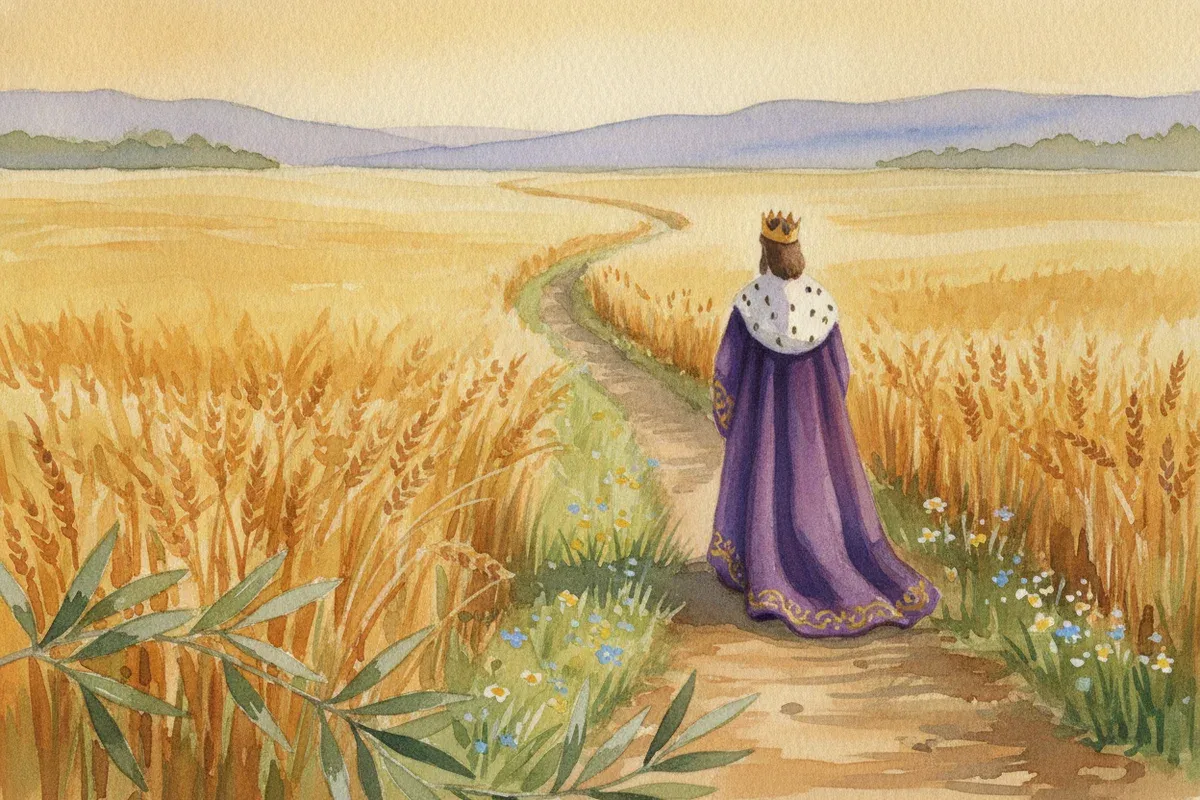
But during the month of Elul, the King leaves the capital city and walks out into the fields.
He makes himself accessible to everyone—including the common people. The families outside the city know he's coming. They wonder if he might take a detour through their field. So they tidy things up. They get their homes in order. Maybe they prepare a small gift for their beloved King. And they wait with hope, longing to catch a glimpse of his smiling face—that he would turn toward them and show them favor.
That is Elul. The King is in the field.
The prophet Isaiah says it without the parable: "Seek Adonai while He is available, call on Him while He is still nearby" (Isaiah 55:6).
Tell your children this story at dinner. Then ask them: if a king were walking through our backyard this month, what would we do to get ready?
Because He is. And that's the imagery we want to anchor our whole month around.
Teshuvah: repentance a child can act out
Elul is the season of teshuvah (teh-SHOO-vah)—a Hebrew word that means "to return" or what many of us may know as "to repent."
Now, "repentance" is a heavy word to hand a six-year-old. But teshuvah carries a picture inside it that even the littlest ones can hold. The word doesn't just mean feeling sorry. It means turning around.
Imagine you're walking one direction—away from the King, doing your own thing, pursuing your own way. To practice teshuvah means you literally stop, turn around, and begin walking back the other direction. Back toward the God who loves you with an everlasting love.
This means repentance is something your children can do with their whole bodies. In our home, we've walked it out—literally. Have your child walk across the room, away from you. Then call their name. Watch them stop, turn, and come back.
Then tell them: that's teshuvah. That's what God invites us to do every time we've walked away from Him. Stop. Turn. Come home. And here's the best part—He's not waiting with crossed arms. He's the King who already came out to the field to meet you.
Children don't need a lecture on sin to understand this. They need to understand the importance of turning, and they need the seed planted deep within their hearts that they are always welcomed back.
Simple ways to practice Elul with your children
Elul rewards the same slow, gentle approach as the rest of the biblical calendar—one small thing, done often. Here are a few practices that fit little hands and short attention spans.
Tell the King-in-the-field story—more than once. Repetition is the curriculum for young children. By the end of the month they should be able to tell it back to you. Narration seals it.
Act out the turn. The walk-across-the-room teshuvah picture, whenever it fits—including in real moments of conflict. When a child needs to make something right with a sibling, you now have shared language: "It's time for teshuvah." Watch how the word softens what "go apologize" hardens.
Listen for the shofar. It's a longstanding tradition to sound the shofar (a ram's horn trumpet) each weekday morning during Elul—thirty days of wake-up calls before the great blast of the Feast of Trumpets. If you have a shofar, let the children take turns. If you don't, even talking about it, or pretending your voice is a trumpet builds the anticipation: the sound is coming.
Ask the nightly question. One quiet question at bedtime, a few nights a week: Is there anything you need to say sorry to God for? Is there anyone you need to make things right with? Keep it short and safe. It's not about making children anxious—it's about teaching them that our Father is merciful, near, and glad when we return.
Get something ready for the King. The families in the parable prepared their homes and their gifts. Let your children choose one way to get ready—a drawing for the Rosh Hashanah table, a memorized verse, a jar they add a pom-pom to for each day of the month. Our free printables are an easy place to find something small for little hands to work on—and our Rosh Hashanah activity bundle is full of coloring pages, copywork, and hands-on activities that will carry your family from Elul right through the feast. Thirty days of small preparation makes the trumpet blast, when it finally comes, mean something.
From the field to the trumpet
Here's where the month is headed: on the first day of Tishrei (the month that follows Elul), the shofar sounds, and the Feast of Trumpets begins. The ten Days of Awe follow, then Yom Kippur (the Day of Atonement), then the joy of Sukkot (the Feast of Tabernacles). The whole fall season opens like a door. If you're new to these appointed times, our biblical feasts hub walks through each one and what it looks like with children.
Elul is the walk up to that door.
And when your children have spent a month learning that the King is near, that turning around is always allowed, and that He comes out to meet those who seek Him—the trumpet won't be a strange noise on a strange day. It will be the sound of the King they've been getting ready for.
What would it look like this year for your family to keep Elul—not perfectly, just intentionally?
Pick one thing. Tell the story of the King in the field tonight at dinner. The rest of the month will follow.
May your home be a field the King walks through.
May your children learn that turning back to God is always one step away.
And may the sound of the shofar, when it comes, find every heart in your house awake and glad—full of love for the Father.
Shalom.